Cart
0
Choosing between topical minoxidil and topical finasteride requires more than comparing two ingredient names. The better option depends on what is happening inside the hair follicle and why thinning has started.
The location and speed of hair loss also matter. Crown thinning, a receding hairline, and diffuse shedding can point to different causes. DHT may drive some forms of pattern loss, while other cases involve stress, illness, inflammation, or physical damage.
Our analysis shows that treatment choice should follow the cause, follicle activity, scalp condition, and safety needs. This article compares topical minoxidil with topical finasteride only.
The Better Treatment Depends on What Is Driving the Hair Loss

Hair loss can begin through several different processes. The cause affects whether topical minoxidil, topical finasteride, or another form of care makes sense.
DHT Sensitive Follicle Miniaturization
Androgenetic alopecia develops when certain follicles respond strongly to dihydrotestosterone, known as DHT. The 5 alpha reductase enzyme helps the body produce DHT from testosterone.
DHT then binds to androgen receptors within sensitive follicles. Over time, these follicles produce finer, shorter hairs. This gradual change is called follicle miniaturization. Male Pattern Baldness commonly develops through this gradual response to DHT in genetically sensitive scalp follicles.
A Shortened or Disrupted Growth Cycle
Healthy follicles move through anagen and telogen phases. The anagen phase supports active growth, while the telogen phase prepares the hair for shedding.
A disrupted hair growth cycle can push more follicles into rest. This may increase shedding and reduce visible density. Topical minoxidil may support follicle activity when active follicles remain.
Inflammation, Scarring, or Physical Damage
Scalp disease, ongoing traction, and scarring can damage follicles in ways these treatments cannot correct alone. Tight hairstyles may keep pulling on the same areas. Inflammation can also damage the scalp and reduce future growth.
Topical treatment cannot remove pulling or reverse established scarring. Pain, burning, scaling, crusting, or smooth scalp areas need medical assessment.
Temporary Shedding After a Health or Life Event
Illness, surgery, childbirth, rapid weight change, severe stress, or nutritional problems can trigger temporary shedding. This often affects the scalp more evenly than pattern hair loss.
Based on our findings, temporary shedding should not automatically be treated as androgenetic alopecia. The trigger and recovery pattern should be checked before choosing treatment.
What Question Does Each Topical Treatment Answer?
Topical Minoxidil
Topical minoxidil asks whether active follicles can produce more visible hair. It may help resting follicles enter the growth phase sooner. It may also support thicker strands where follicle activity remains.
This makes it more relevant when visible density is the main concern. However, a response does not confirm what caused the thinning. Hair Loss Solutions for Regrowth should be selected according to the cause of thinning, remaining follicle activity, scalp condition, and individual safety needs.
Topical Finasteride
Topical finasteride asks whether DHT linked miniaturization is driving continued pattern loss. It aims to reduce DHT activity around sensitive scalp follicles.
This may help slow further thinning in suitable adults with androgenetic alopecia. It does not mean every receding hairline or thin area has a hormonal cause.
What Neither Treatment Can Confirm
Neither treatment can diagnose hair loss. A response may suggest that active follicles remain, but it cannot rule out another cause. The claim that Minoxidil can be used for beard growth refers to an off label use and should not be treated as proof that every scalp formulation is suitable for facial skin.
Scalp examination, medical history, shedding pattern, and health checks may still be needed. This matters when loss is sudden, patchy, painful, inflamed, or spreading quickly.
Scenario One: Early Crown Thinning

Signs That Point Towards Pattern Hair Loss
Pattern hair loss at the crown usually develops slowly. Hairs in the area become finer before the scalp looks clearly exposed. A family history and steady progression may support this diagnosis.
When Topical Finasteride May Be Discussed
Topical finasteride may be discussed for adult men with DHT linked crown thinning. The aim is to slow further follicle miniaturization and protect hairs that remain active.
When Topical Minoxidil May Be Discussed
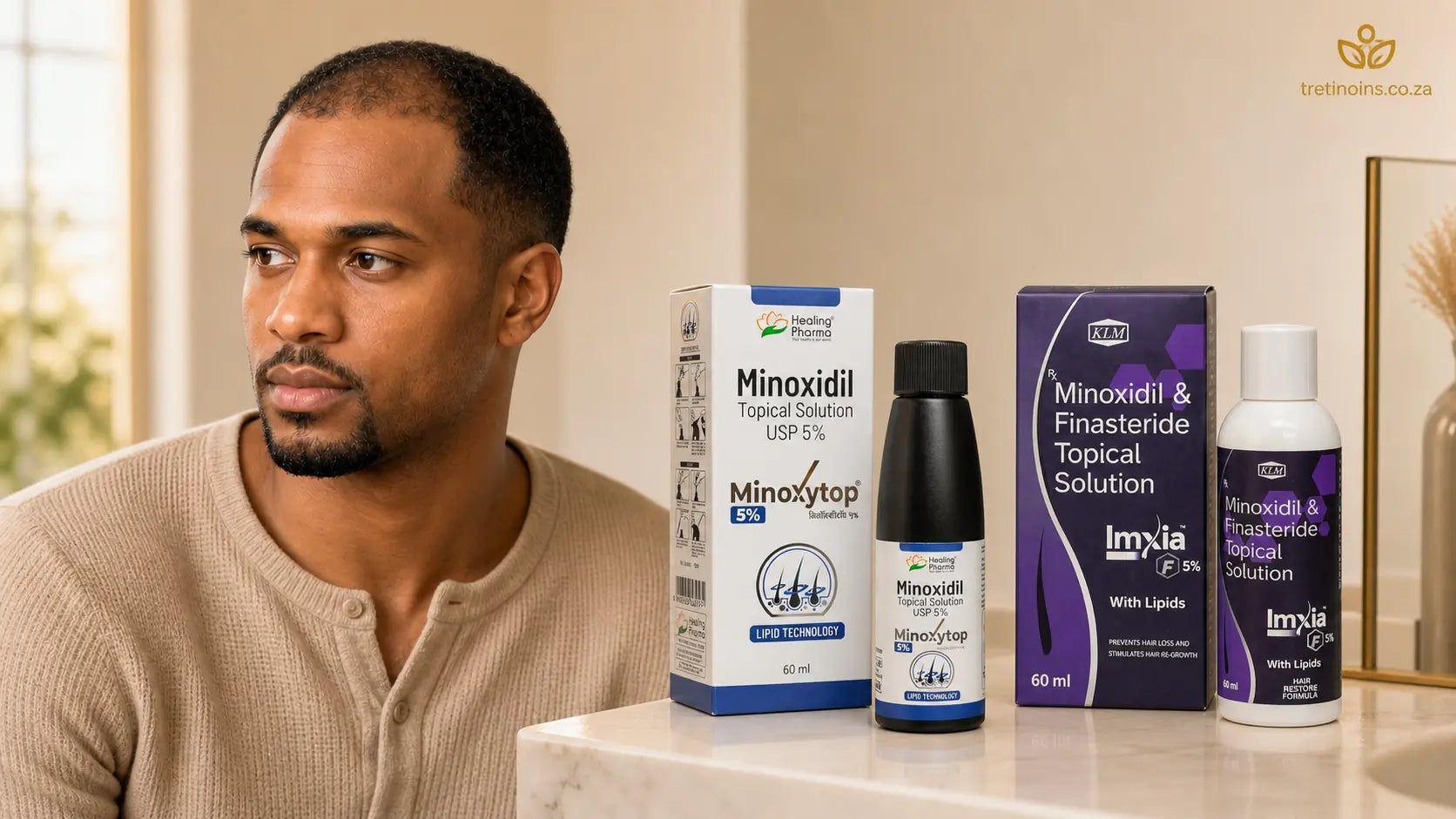
Topical minoxidil may be considered when visible density is the main concern. It may support thicker growth from active follicles within the thinning area. When considering Minoxytop 5% 60 ml, check the concentration, application instructions, scalp condition, and suitability for the intended user.
When a Combined Topical Plan May Be Discussed
A clinician may discuss both when reducing DHT activity and supporting growth are separate goals. The decision should consider scalp health, medical history, and possible unwanted effects.
What Progress Should Be Tracked
Track crown visibility, hair density, shedding, and the speed of further thinning. Take photographs from the same angle with similar lighting and hair length. We found that repeated images show gradual progression more clearly than daily mirror checks.
Scenario Two: A Receding Hairline and Thinning Temples
Why Frontal Follicles May Respond Differently
Hairline and temple follicles may respond less evenly than crown follicles. The result depends on how many active, fine hairs remain. Lighting and styling can also make small changes harder to judge.
What Slowing Progression Means at the Hairline
Slower progression may mean fewer fine hairs disappear over time. The hairline may stay more stable without showing clear new growth. Preserving active follicles can still count as a useful result.
Why Regrowth Expectations Need Care
Topical treatment may thicken fine hairs near a receding area. It cannot promise the return of the original hairline. Response varies with age, loss stage, follicle activity, and the cause of recession.
When Treatment Is Unlikely to Rebuild a Lost Hairline
Smooth areas with no visible fine hairs may have limited growth potential. Scarring can reduce that potential further. We found that realistic goals should focus on preserving active hairs and slowing further recession.
Scenario Three: Diffuse Thinning Across the Top

Male Pattern Diffuse Thinning
Some men develop reduced density across the top without one clear bald area. The sides and back may remain fuller. Slow progression and family history may point towards androgenetic alopecia.
Female Pattern Thinning
Female pattern hair loss often causes a wider central part and lower density across the upper scalp. The frontal hairline may remain visible. Other causes should still be ruled out before choosing treatment.
Temporary Diffuse Shedding
Temporary shedding can follow illness, childbirth, severe stress, rapid weight change, or medicine changes. The loss often affects the scalp more evenly. It may improve once the trigger settles or receives treatment.
Tests or Assessment Questions That May Help Find the Cause
A clinician may ask about recent illness, childbirth, diet changes, stress, medicines, and family history. They may also check the scalp, shedding pattern, and speed of progression.
Blood tests may help when iron deficiency, thyroid problems, or another health issue seems possible. Our analysis found that timing and pattern often provide the first useful clues.
Scenario Four: Sudden or Patchy Hair Loss
Round Bald Patches
Smooth, round patches may point to alopecia aerate rather than pattern hair loss. Eyebrows, eyelashes, or body hair may also become affected. This type of loss needs a medical assessment before topical treatment is chosen.
Broken Hairs and Scalp Scaling
Broken hairs with itching, redness, flakes, or crusting may suggest a scalp infection or inflammatory condition. Some infections can spread to other people. Topical minoxidil and finasteride do not treat the infection itself.
Pain, Burning, or Scarring
Pain, burning, tenderness, or a tight feeling can occur with some scarring hair disorders. Smooth areas without visible follicle openings may suggest permanent follicle damage. Early medical care may help limit further loss.
Why Treatment Comparison Should Pause Until the Cause Is Checked
Sudden or patchy loss does not follow the usual course of androgenetic alopecia. Starting the wrong topical treatment may delay care for an infection, immune condition, or scarring disorder. A doctor or dermatologist should check the scalp before minoxidil or finasteride is considered.
Which Topical Treatment Is Better at Slowing Progression?

When DHT Is a Likely Driver
Topical finasteride may receive more attention when DHT drives gradual pattern loss. Common signs include crown thinning, temple recession, and finer hairs across the top.
Its main goal is to limit further follicle miniaturization. Topical minoxidil may support density, but it does not directly reduce DHT activity.
When DHT Is Not the Likely Driver
A DHT focused treatment may offer little value when another issue causes the loss. Sudden shedding, illness, childbirth, low iron, thyroid problems, traction, and scalp disease need separate assessment.
Topical minoxidil may be discussed when active follicles need growth support. However, it cannot correct every trigger or repair scarred follicles.
Why Topical Finasteride Evidence Must Be Read Separately from Oral Finasteride Evidence
Results from oral finasteride studies cannot be applied directly to topical finasteride. The two forms can produce different medicine levels in the blood and different changes in scalp and blood DHT.
Topical studies also vary in formula, amount, study length, and participant group. Our analysis shows that claims about topical treatment should come from topical evidence, not borrowed results from another form.
Visit Also: What Is Minoxidil
Which Topical Treatment Is Better for Visible Density?
Active but Miniaturized Follicles
Follicles that still produce fine hairs may respond better than inactive areas. Topical minoxidil may support thicker growth. Topical finasteride may help slow further shrinkage when DHT is involved.
Dormant Follicles Versus Lost Follicles
Dormant follicles may still have some growth potential. Long established smooth areas may contain few follicles able to produce visible hair. Neither treatment can promise regrowth where follicle activity has been lost.
Hair Shaft Thickness and Scalp Coverage
Visible density does not depend on hair count alone. Thicker hair shafts can cover more scalp and make thinning less noticeable. Hair colour, curl pattern, and strand width can also affect how dense the area looks.
Why Visible Density Can Improve Without Restoring the Original Hairline
Treatment may thicken fine hairs or protect remaining follicles without moving the hairline forwards. We found that better scalp coverage and slower recession can still count as useful progress. Full restoration is less likely when frontal loss is longstanding.
When One Topical Treatment May Be Enough
When Growth Support Is the Main Aim
Topical minoxidil may be enough when the main aim is better visible density from active follicles. This may apply when DHT is not clearly driving the loss.
When Slowing DHT Related Progression Is the Main Aim
Topical finasteride may be considered alone for suitable adult men with DHT related pattern loss. The main goal is to protect active follicles from continued miniaturization.
When Safety or Scalp Sensitivity Limits the Choice
Using one treatment can make unwanted effects easier to identify. Minoxidil may irritate a dry or inflamed scalp. Topical finasteride may still enter the blood, so personal safety factors need review.
A clinician can help choose the option with the more suitable risk profile.
When the Diagnosis Is Still Uncertain
Starting both treatments may make little sense when the cause remains unclear. Sudden shedding, scalp pain, patchy loss, or inflammation may need another form of care.
Based on our findings, diagnosis should come before adding more treatment. One carefully chosen option may be easier to assess after the cause is confirmed.
When a Combined Topical Plan May Be Considered

Different Biological Targets
Topical minoxidil supports active follicles and visible density. Topical finasteride reduces DHT activity linked with follicle miniaturization. A clinician may consider both when a suitable adult needs help with each treatment goal. A Minoxidil and Finasteride Solution 5% combines growth support with DHT reduction, but suitability still depends on diagnosis, scalp tolerance, medical history, and professional guidance.
What Topical Combination Evidence Needs to Prove
Good evidence should compare the combination with each treatment used alone. It should measure hair density, strand thickness, scalp tolerance, and unwanted effects. The study should also explain the formula, participant group, and length of follow up.
Results from one formula cannot confirm that every topical combination will work the same way.
Why More Treatment Does Not Always Mean Better Treatment
Using two active treatments may increase scalp irritation or make reactions harder to trace. Some people may meet their main goal with one option. Others may not have DHT related hair loss at all.
Our analysis shows that treatment should match the diagnosis rather than the number of ingredients.
What Should Be Monitored After Combining Treatments
Track redness, itching, flaking, burning, and other scalp symptoms. Record dizziness, sexual symptoms, mood changes, or other unwanted effects.
Take regular photographs under the same conditions. Compare crown visibility, hairline changes, density, and continued progression. Seek medical advice when loss worsens or new symptoms appear.
How to Read Minoxidil and Finasteride Studies Carefully
Was Finasteride Topical or Oral?
Check which form researchers studied. Oral and topical finasteride can produce different blood exposure and DHT changes. Oral findings should not be treated as proof for a topical formula.
Was Minoxidil Topical or Oral?
The same rule applies to minoxidil. This article focuses on scalp applied treatment. Evidence from oral studies does not answer the same safety or suitability questions.
Was the Study About Men, Women, or Both?
A result from adult men may not apply equally to women. Pregnancy risk, hormone status, hair pattern, and age can change suitability. Check who took part before accepting a broad claim.
Which Hair Loss Pattern Was Studied?
Look for the exact diagnosis. A study on androgenetic alopecia cannot prove that treatment helps temporary shedding, traction alopecia, or scarring loss.
Was the Result Based on Hair Count, Density, Photographs, or Personal Ratings?
Hair count measures the number of hairs in a set area. Density looks at scalp coverage. Photographs and personal ratings may capture visible change, but they can involve more judgement.
How Long Were Participants Followed?
Short studies may detect early change but miss long term results or later side effects. Hair grows slowly, so study length affects what researchers can measure.
Did the Study Compare the Ingredients Directly?
A direct comparison gives clearer information than comparing figures from separate studies. We found that formula, participant age, loss stage, and measurement methods can change the results.
Safety Screening Before Choosing a Topical Treatment
Pregnancy and Possible Pregnancy
Anyone who is pregnant, planning pregnancy, or breastfeeding should seek medical advice before using either treatment. Topical finasteride must not be used during pregnancy because exposure may harm a developing male baby.
Heart or Blood Pressure History
Topical minoxidil can rarely affect blood pressure or heart rate when enough medicine enters the blood. People with low blood pressure, heart disease, chest pain, fainting, or palpitations need a medical review first.
Hormone Related Concerns
Topical finasteride reduces DHT activity and some medicine may enter the blood. Discuss previous sexual symptoms, fertility concerns, breast changes, or mood problems with a clinician before use.
Scalp Inflammation or Broken Skin
Redness, infection, soreness, burns, cuts, or broken skin can increase irritation and medicine absorption. A Derma Roller with 0.5mm 540 Titanium Microneedle may further irritate damaged skin, so it should not be used on an inflamed or broken scalp without professional advice. The scalp condition should be assessed before a topical hair loss treatment begins.
Medicines and Supplements
Tell the clinician about all medicines and supplements you use. This includes blood pressure medicines and other scalp treatments. When using a Shop all skincare products category, check whether any facial, haircare, or scalp formulas contain ingredients that could increase irritation around the treated area. Some products may increase irritation or affect how much medicine enters the skin.
Previous Reactions to Topical Treatments
A past reaction to a scalp solution, foam, or cosmetic product may raise the chance of another reaction. Mention previous itching, swelling, burning, rash, dizziness, or breathing problems during the safety review.
Why Topical Hair Loss Treatment Can Appear to Fail
The Diagnosis Was Wrong
Minoxidil and finasteride mainly relate to pattern hair loss. They may not help shedding caused by illness, stress, traction, infection, or scarring. Treatment can seem ineffective when the real cause needs different care.
The Follicles Are No Longer Active
Fine hairs suggest that some follicle activity may remain. Longstanding smooth areas often have less chance of visible regrowth. Treatment may preserve nearby hair without restoring dense coverage.
The Treatment Does Not Reach the Scalp Properly
Topical treatment needs direct contact with the affected scalp. Dense hair, oils, styling products, and residue can leave more solution on the hair. This can reduce contact with the thinning area.
Scalp Irritation Limits Regular Use
Dryness, itching, redness, or burning can make regular use difficult. An inflamed or painful scalp may also signal another condition. Persistent irritation needs professional assessment.
Ongoing Traction or Chemical Damage Continues
Tight braids, extensions, weaves, relaxers, and repeated heat can keep damaging the hair. Topical treatment cannot remove pulling or repair a broken hair shaft. The damaging routine must also change.
Progress Is Judged from Memory
Daily mirror checks make slow changes difficult to measure. Lighting, hair length, and styling can alter the appearance of density. Regular photographs provide a more reliable comparison.
Another Health Issue Is Contributing to the Loss
Low iron, thyroid problems, childbirth, major illness, rapid weight change, or some medicines can affect shedding. Our analysis shows that continued loss should prompt a review of the diagnosis and general health.
A Better Way to Monitor Treatment Response
Create a Photographic Baseline
Take clear photographs before treatment begins. Keep the hair dry and show each thinning area clearly. These images provide a starting point for later comparisons.
Track Separate Scalp Zones
Review the frontal hairline, temples, middle scalp, crown, and part width separately. One area may remain stable while another continues thinning.
Record Shedding and Scalp Symptoms
Note changes in shedding, itching, redness, flaking, burning, or soreness. Scalp comfort can affect how regularly a topical treatment is used.
Review Whether Loss Is Stable, Improving, or Still Progressing
Compare photographs taken under the same lighting, angle, hairstyle, and hair length. Check whether coverage has improved, remained stable, or reduced further.
Reassess the Diagnosis Before Changing Treatment
Poor progress does not always mean a stronger treatment is needed. Our review found that irregular use, scalp irritation, ongoing traction, or another health issue may affect results. A clinician should review continued or changing hair loss before the treatment plan changes.
Minoxidil vs Finasteride Decision Paths
Adult Man with Early Crown Thinning
Ask whether the thinning is gradual and follows a family pattern. Then decide whether the main goal is improved density or slower DHT related progression. A scalp check can confirm whether active follicles remain.
Adult Man with a Receding Hairline
Ask how quickly the hairline is moving and whether fine hairs remain around the temples. The next step is to set realistic goals for retention and possible coverage. Longstanding smooth areas may have limited regrowth potential.
Woman with a Widening Part
Ask whether the thinning developed slowly across the upper scalp. Pregnancy, hormone changes, iron levels, thyroid symptoms, and recent childbirth also matter. The cause should be confirmed before comparing topical options.
Person with Diffuse Shedding After Illness or Stress
Ask when the shedding began and what happened during the previous months. Illness, surgery, stress, weight change, or medicine changes may disrupt the hair cycle. A temporary trigger may need attention before pattern loss treatment.
Person with Scalp Redness, Pain, or Scaling
Ask whether there is burning, crusting, broken hair, pus, or smooth scalp skin. These signs may point to infection, inflammation, or scarring. A medical assessment should come before treatment selection.
Person Who Cannot Tolerate One Topical Option
Ask which symptom appeared and whether it came from the active ingredient or the formula base. Scalp irritation, dizziness, or symptoms outside the scalp need review. Based on our findings, changing treatment without checking the reaction may hide the real cause.
Which Is Better for Hair Loss?
-
Topical minoxidil may suit people whose main goal is better growth and visible density. It may support active follicles but does not directly reduce DHT.
-
Topical finasteride may suit suitable adults with DHT linked pattern loss. It may help slow further follicle miniaturization, especially when thinning follows a gradual pattern.
-
A clinician may consider both treatments when growth support and DHT reduction are separate goals. A combined plan still requires checks for scalp health, medical history, and unwanted effects. When reviewing topical hair loss options on https://www.tretinoins.co.za/, check the active ingredients, concentration, directions, safety information, and suitability before choosing a product.
-
Neither treatment should replace a clear diagnosis. Sudden shedding, round patches, scalp pain, inflammation, scarring, or unclear loss needs medical assessment first.
Our analysis shows that the better choice depends on the cause of thinning, remaining follicle activity, affected scalp area, and personal safety needs.
Frequently Asked Questions
Does Topical Finasteride Work Without Topical Minoxidil?
Yes, topical finasteride may work alone in suitable adults with DHT linked pattern hair loss. Its main aim is to slow follicle miniaturization. Results still depend on diagnosis, loss stage, and remaining follicle activity.
Is Topical Minoxidil Useful if DHT Is Still Affecting the Follicles?
It may still support thicker growth from active follicles. However, it does not directly reduce DHT activity. Continued DHT related thinning may limit how much density improves over time.
Does Using Both Topical Treatments Always Give Better Results?
No. Some studies report better density with a combined formula, but this does not apply to everyone. Formula, diagnosis, scalp tolerance, and personal safety needs can affect the result.
Can Topical Treatment Regrow Hair on a Smooth Bald Area?
Longstanding smooth areas often have fewer active follicles. This lowers the chance of visible regrowth. Treatment may help nearby miniaturized hairs without restoring full coverage.
Which Topical Treatment Is More Suitable for Women?
Topical minoxidil is more commonly considered for female pattern hair loss. Topical finasteride needs specialist assessment because female evidence remains limited. Pregnancy and possible pregnancy also require strict care.
Can Scalp Inflammation Reduce the Chance of a Good Response?
Yes. Redness, scaling, pain, burning, or broken skin can affect comfort and regular use. Inflammation may also point to another scalp condition that needs treatment first.
When Should the Treatment Plan Be Reviewed?
Review the plan when hair loss keeps progressing, scalp symptoms continue, or unwanted effects appear. A review also helps when photographs show no clear change after a fair assessment period.
What Signs Mean the Diagnosis Should Be Checked Again?
Seek another assessment for sudden shedding, round patches, scalp pain, crusting, scarring, or rapid progression. Loss of eyebrows or body hair also needs attention. These signs may not fit ordinary pattern hair loss.
Conclusion
Topical minoxidil and topical finasteride answer different hair loss needs. Minoxidil may support active follicles and improve visible density. Finasteride may suit suitable adults with DHT linked pattern thinning.
The better choice depends on the cause, affected area, follicle activity, scalp health, and personal safety needs. Some people may need one topical treatment. Selected cases may require both after a proper medical review.
Sudden shedding, round patches, scalp pain, inflammation, or scarring need assessment before treatment begins. Regular photographs and scalp checks can help measure progress. Treatment decisions should follow the diagnosis rather than the ingredient name alone.