Cart
0
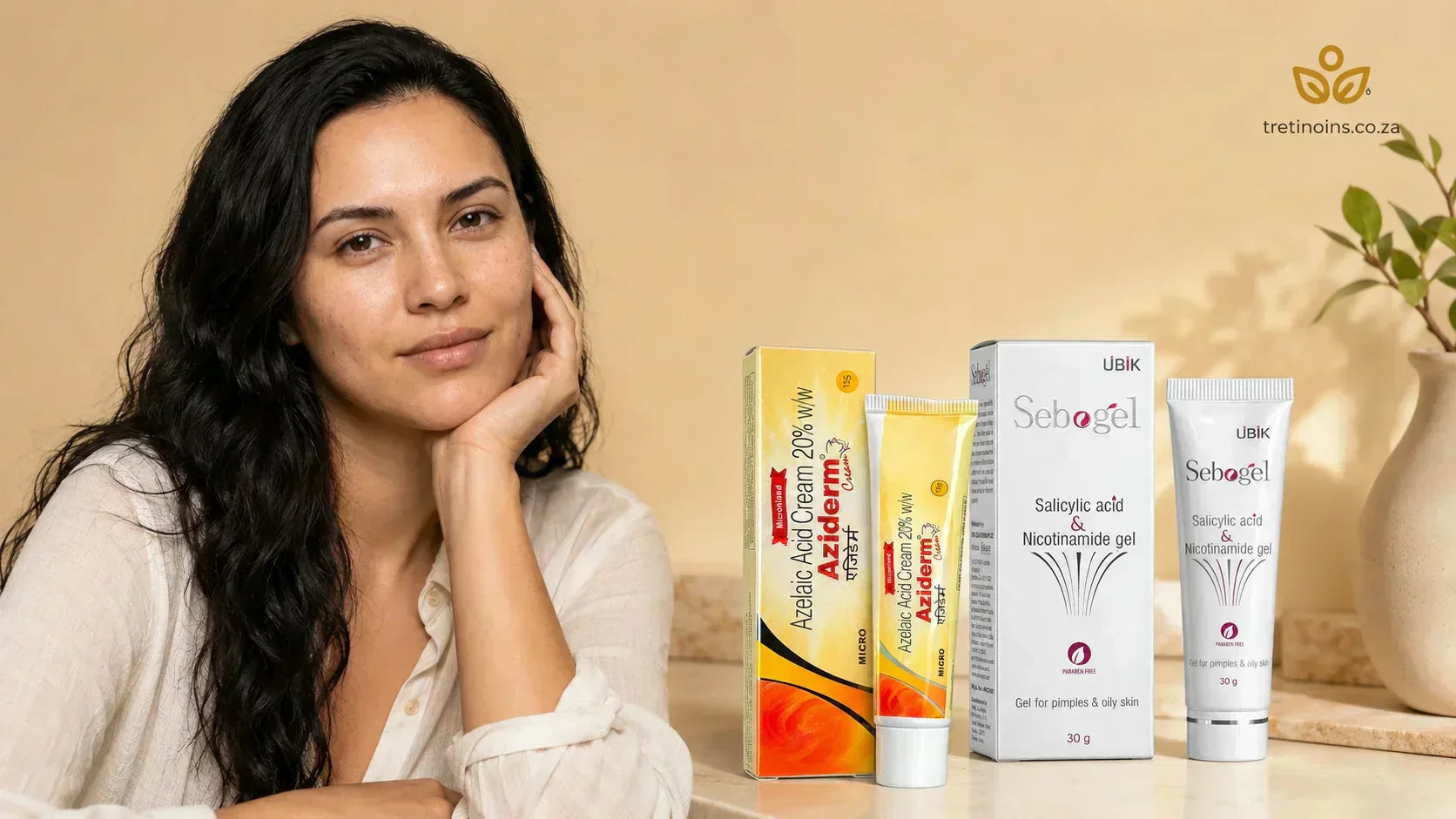
A stronger active is not always the better choice for acne marks. For South African skin, the better question is where the acne problem starts. Some marks begin with blocked pores and fresh breakouts. Others remain after the breakout has already settled.
Sebogel Salicylic Acid and Nicotinamide Gel is more useful earlier in the acne cycle. It fits skin that keeps forming clogged pores, blackheads, whiteheads, and oily bumps. When breakouts keep returning, pore care matters before mark care.
Azelaic acid is more useful later in the acne cycle. It fits flat brown marks, redness, and uneven tone left after acne. This is why it often makes sense when the spot is gone, but the mark is still visible.
Our analysis shows that irritation control matters for many South African skin tones. If the skin becomes dry, sore, or inflamed, marks may look darker and take longer to settle. The goal is not to use the strongest routine. The goal is to choose the right activity at the right stage.
First identify the type of mark on your skin

Before choosing salicylic acid or azelaic acid, look closely at what the skin is showing. A brown mark, a red mark, a dent, and a hidden bump do not need the same care. Understanding Acne Marks vs Dark Spots helps separate leftover pigment from active bumps, redness, melasma, and deeper scars.
Brown flat marks after acne
Brown flat marks often point to post inflammatory hyperpigmentation. This happens when inflammation from acne triggers extra pigment activity in the skin. Melanin gives skin its colour, but after a breakout, it can collect more strongly in one area.
These marks usually sit flat on the skin. A Hyperpigmentation & Dark Spots Bundle should support pigment care without ignoring acne control, irritation risk, and daily sunscreen. They do not feel like dents or raised scars.
For this type of mark, azelaic acid often fits the concern better than a pore focused active alone. Skin Brightening products for melasma and PIH should still be matched to the type of pigmentation, because melasma and post acne marks do not always need the same plan.
Red marks after inflamed spots
Red marks can appear after swollen or irritated spots. The area may still look flushed after the pimple has calmed down. Heat, rubbing, harsh products, or picking can make the redness more visible.
For this concern, the routine should stay calm. Our analysis shows that skin comfort matters before adding stronger active steps.
Rough texture or indented scars
Rough texture and indented scars are different from colour changes. A dent, pit, or raised area means the skin surface has changed, not only the tone.
Salicylic acid and azelaic acid may support smoother looking skin, but they should not be expected to remove deeper scars. If scarring is clear or getting worse, professional advice is the safer step.
New bumps that look like marks
Some marks are not old marks at all. They may be clogged pores, closed bumps, or spots forming under the skin. These can look darker or uneven before they fully come up.
This is where salicylic acid may make more sense. If the area feels bumpy, oily, or congested, the problem may still be active acne rather than leftover pigmentation. A Salicylic Acid vs Benzoyl Peroxide comparison can help when deciding whether clogged pores or red inflamed pimples are causing the active breakouts.
Also read for: Melasma & Dark Patches Bundle
Sebogel Salicylic Acid and Nicotinamide Gel works earlier in the acne cycle
Salicylic acid is most useful before a dark mark has fully formed. It fits the stage where pores are blocked, oil is building up, and new bumps keep appearing. For acne marks, this matters because every new inflamed spot can leave another mark behind.
It helps when pores are blocked
Acne often starts inside the pore. Oil, sebum, and dead skin can collect there and form a blockage. This can show up as blackheads, whiteheads, or small bumps under the skin.
Salicylic acid suits this stage because it targets pore congestion. It is often a better fit when the skin feels oily, bumpy, or clogged rather than simply uneven in colour.
It can reduce the chance of new marks forming
Dark marks often follow inflammation. If fewer new breakouts appear, fewer new dark marks may form later. This is why salicylic acid can support an acne mark plan before the mark even starts.
Based on our findings, many people focus only on fading old marks. But if new pimples keep forming, the cycle continues. Managing clogged pores can help reduce that repeat pattern.
Its limit for South African acne marks
Salicylic acid is not always the most focused option once the spot has healed. If the only concern left is flat brown pigment, azelaic acid may suit that stage better.
This is especially important for South African skin tones that mark easily after irritation. Too much pore treatment can dry the skin and make the routine harder to tolerate.
Also read for: How to Get Tretinoin Cream South Africa Safely as a Beginner
Azelaic acid works later in the acne mark cycle

Azelaic acid often fits the stage after the breakout has calmed down. The pore may no longer feel blocked, but the skin still shows brown marks, redness, or uneven tone. This makes it useful when the concern has moved from active acne to visible mark care.
It targets uneven tone linked to pigment
Brown acne marks are often linked to extra pigment after inflammation. One part of this process involves tyrosinase. This is an enzyme that helps the skin make pigment.
Azelaic acid is often used because it can support a more even looking tone. In simple terms, it helps when the skin keeps showing colour changes after the pimple has healed.
It suits inflammation linked marks
Some post acne marks look red, warm, or irritated rather than brown. This can happen after inflamed spots, picking, harsh cleansing, or too many active products.
Azelaic acid may suit skin that needs a calmer approach. It can fit routines where the goal is to reduce the look of redness and support more balanced looking skin.
Its limit for clogged pores
Azelaic acid is not always enough when blackheads and whiteheads are the main issue. If pores are still blocked, the skin may need pore focused support.
This is where salicylic acid may fit better. If the skin feels oily, rough, or congested, treating only the mark may miss the cause of new breakouts.
Also read for: Tretinoin Strength for Flat Warts Guide
Why South African skin needs a cautious active routine
South African skin often deals with more than one trigger at the same time. Sun exposure, heat, sweat, oil, and irritation can all affect acne prone skin. This is why an active routine should be steady, not aggressive.
Sun exposure can keep marks darker
Dark marks can look more visible when the skin gets regular sun exposure. This matters for people who spend time outside, drive often, walk in daytime, or work near windows.
Daily SPF helps protect skin while marks fade. It also helps reduce the chance of old marks looking darker again. Keep this step simple and consistent, especially when using active ingredients.
Melanin rich skin can react to irritation with more pigment
Melanin rich skin can be more likely to show colour changes after inflammation. This can happen after acne, but it can also happen after irritation from the routine itself.
Picking spots, harsh scrubs, and too much exfoliation can make marks look worse. If the skin feels sore, dry, or tight, reduce active use and focus on comfort. A calm skin barrier supports better visible progress.
Heat and sweat can affect acne prone skin
Heat and sweat can make oily skin feel heavier during the day. Sweat mixed with oil and dead skin may also make clogged pores feel more noticeable.
This does not mean the routine should become harsh. A light, comfortable routine is easier to follow in warm weather. If the skin feels congested, salicylic acid may help with pore care, while azelaic acid may suit leftover marks once the breakout settles.
Also read for: Hydroquinone Cream South Africa for Melasma & Dark Spots
Decision map: which ingredient fits your concern?

The best choice depends on what your skin is doing right now. Do not choose an active only because it sounds stronger. Choose the one that matches the stage of the concern.
Choose salicylic acid when the problem is congestion
Sebogel Salicylic Acid and Nicotinamide Gel makes sense when the skin feels blocked or oily. This may show as blackheads, whiteheads, shiny areas or repeated small pimples. The concern is still active because pores are getting clogged.
In this case, the goal is to reduce the buildup that keeps creating new breakouts. If fewer inflamed spots form, there may be fewer new marks to manage later.
Choose azelaic acid when the problem is leftover marks
Azelaic acid fits better when the breakout has settled, but the skin still looks uneven. This may show as brown marks, redness, patchy tone, or skin that feels sensitive after acne.
This stage is less about clearing blocked pores and more about supporting tone and comfort. It can be a better match when the skin needs mark care without a harsh routine.
Consider both when acne and marks happen together
Some people have active breakouts and leftover marks at the same time. Tretinoin Gel for acne and dark mark care may be considered in some routines, but it should not be layered with several acids if the skin already feels irritated. In that case, salicylic acid and azelaic acid may both have a place in the routine.
The key is spacing and tolerance. Do not add both if your skin already feels tight, dry, sore, or irritated. Start with the concern that is most active, then adjust only when the skin feels comfortable. An Adapalene vs Tretinoin comparison may help when choosing a retinoid for recurring acne, clogged pores, dark marks, and skin tolerance.
Also read for: What is hydroquinone tretinoin and mometasone furoate Skinshine cream used for?
Using both without making PIH worse

Using both Sebogel Salicylic Acid and Nicotinamide Gel and azelaic acid can make sense when acne and marks happen together. Still, PIH can look worse when the skin becomes irritated. The routine should protect the skin barrier before chasing faster results. A Tretinoin 0.025 vs 0.05 comparison can help users understand why lower strengths may suit sensitive or pigmentation prone skin better at the start.
Barrier comfort comes before active strength
Tightness, burning, peeling, and stinging are warning signs. They often mean the skin is struggling with the routine. If these signs keep appearing, more active use is not the answer. Anti-Acne & Anti-Wrinkle Treatments creams may contain strong active ingredients, so they should be checked before adding salicylic acid or azelaic acid to the same routine.
For South African skin that marks easily, irritation can be a bigger setback than slow progress. A comfortable skin barrier helps the skin look calmer and more even over time.
Separate routines can be safer than stacking
Some people try to use every active in one routine. This can make the skin feel overloaded, especially when acne prone skin is already inflamed.
Separating actives can be safer than layering them together. One active can focus on clogged pores, while another can support marks and uneven tone at a different time. This keeps the routine more controlled without making it feel harsh.
Avoid adding too many actives at once
Strong scrubs, several acids, retinoids, and heavy exfoliation can raise irritation risk when used too closely together. Tretinoin Creams for acne, wrinkles and anti-aging should also be introduced carefully if they are part of a wider routine for marks and breakouts. The skin may become dry, sore, shiny, or more sensitive. A Tretinoin 0.05% vs 0.1% comparison should consider irritation risk, because stronger retinoid use may worsen marks if the skin reacts badly.
Our analysis shows that many PIH routines fail because the skin gets irritated before it gets steady. Tretinoin Cream Side Effects such as dryness, peeling, stinging, and redness should be considered before adding retinoids to an acid based acne mark routine. Add active steps slowly, watch how the skin reacts, and reduce use if the skin feels stressed.
Also read for: What is Vitamin C Hyaluronic Sheet Mask and How its work on Skin
What the evidence can and cannot tell us

Evidence can help guide ingredient choices, but it cannot predict every skin result. Salicylic acid and azelaic acid may both support acne prone skin, but the outcome depends on the person, the acne type, and the full routine.
Acne studies often focus on mild to moderate acne
Many acne studies look at mild to moderate acne. This means the findings may not fully match every person with deep, painful, or long lasting breakouts.
Results can also vary by skin type, oil levels, sensitivity, climate, and routine habits. For South African skin, irritation and sun exposure can also affect how marks look over time.
Acne control and mark fading are not the same result
Clearing a spot and fading a mark are not the same thing. A pimple may settle in a few days, while the brown or red mark can stay visible for much longer.
This is why acne control and mark care often need different thinking. A comparison of Azelaic Acid vs Tretinoin is a different question, but it also depends on whether acne control, pigmentation, or skin tolerance is the main goal. Salicylic acid may help reduce new breakouts, while azelaic acid may better suit leftover tone changes. Marks also need time and daily sun protection to look less visible.
Painful or cystic acne needs better guidance
Painful, deep, or cystic acne should not be managed by guessing with stronger actives. These breakouts can be more likely to leave scars or long lasting marks. If acne is sore, swollen, spreading, or causing texture changes, get advice from a qualified skin professional.
Before deciding Where to Buy Tretinoin in South Africa, confirm whether tretinoin is suitable for your acne pattern, pigmentation concern, and skin tolerance. Better guidance can help reduce irritation, scarring risk, and routine mistakes. Readers comparing acne, pigmentation, and treatment options can review related guidance on https://www.tretinoins.co.za/ before choosing a routine.
Also read for: Which Tretinoin Strength is Best for Acne, Dark Spots, and Wrinkles?
What not to do when treating acne marks on South African skin
Treating acne marks is not only about choosing the right active. It is also about avoiding habits that keep the skin inflamed. For South African skin that marks easily, irritation can slow visible progress.
Do not scrub marks to fade them faster
Scrubbing does not lift dark marks faster. Brown marks are linked to pigment after inflammation, not dirt sitting on the skin.
Rough scrubs, harsh cloths, and strong rubbing can make the skin more irritated. This may leave the area looking darker or more uneven.
Do not use acids on irritated or broken skin
Acids should not go onto skin that feels raw, cracked, sore, or broken. This can increase burning, stinging, and peeling.
If the skin barrier feels damaged, pause active steps and focus on comfort. A calmer base makes it easier to return to acne mark care later.
Do not skip sunscreen while treating marks
Sun exposure can keep acne marks darker for longer. This matters in South Africa, where outdoor exposure can be high even on mild days.
Sunscreen helps protect the skin while marks fade. Without it, active ingredients may feel less useful because UV exposure keeps adding stress to the skin.
Do not copy someone else’s active routine without checking your skin tolerance
A routine that suits one person may be too strong for another. Tretinoin Cream Price South Africa may vary by strength and formulation, but cost should not replace checks for suitability and irritation risk. Skin type, acne type, sun exposure, and sensitivity all change how the skin reacts.
Start with what your skin can handle. If tightness, burning, peeling, or stinging keeps happening, the routine needs to be reduced. Tolerance matters more than using more actives. When reviewing Tretinoins all products, choose by skin concern, active ingredient, strength, and skin tolerance rather than copying another routine.
Also read about: Salicylic Acid Vs Benzoyl Peroxide
FAQs of Salicylic Acid Vs Azelaic Acid
Which is better for South African acne marks, salicylic acid or azelaic acid?
It depends on the type of concern. Sebogel Salicylic Acid and Nicotinamide Gel suits clogged pores, oily skin, blackheads, whiteheads, and repeat pimples. Azelaic acid often suits brown post acne marks, redness, and uneven tone better.
Can salicylic acid and azelaic acid be used together on brown skin?
Yes, they may be used in the same skincare plan if the skin can tolerate them. Brown skin can react strongly to irritation, so the routine should stay gentle. Using too much at once may make marks look worse.
Is azelaic acid better for PIH than salicylic acid?
Azelaic acid is often the better fit for PIH because it targets uneven tone linked to pigment. Salicylic acid works more on clogged pores and active breakouts. If only brown marks remain, azelaic acid may be the more direct choice.
Can salicylic acid help prevent new dark marks?
Salicylic acid may help prevent new dark marks in an indirect way. If it reduces clogged pores and fresh breakouts, fewer inflamed spots may form. Fewer spots can mean fewer new marks later.
Should I use azelaic acid or salicylic acid first?
Use Sebogel Salicylic Acid and Nicotinamide Gel first if your main issue is congestion, oiliness, blackheads, or whiteheads. Use azelaic acid first if your main issue is leftover brown marks, redness, or uneven tone. Choose based on what your skin is showing now.
Can using both make dark marks worse?
Using both can make marks worse if the routine irritates the skin. Burning, peeling, stinging, and tightness are warning signs. For South African skin that marks easily, comfort should come before active strength.
What should I avoid when using acids for acne marks?
Avoid harsh scrubs, picking spots, using acids on broken skin, and layering too many strong activities. Do not skip sunscreen while treating marks. If irritation continues, reduce active use and get advice from a qualified skin professional.
Conclusion
The right choice depends on what your skin is showing now. If clogged pores, oily zones, blackheads, whiteheads, and repeat pimples are the main issue, Sebogel Salicylic Acid and Nicotinamide Gel usually makes more sense first. It helps earlier in the acne cycle, before new marks have a chance to form.
If the breakout has settled but brown post acne marks, redness, or uneven tone remain, azelaic acid is often the better first choice. It fits the stage where the skin needs tone support, not only pore care.
Some South African skin types deal with both active acne and leftover marks at the same time. In that case, both ingredients may have a place, but spacing matters. A routine that the skin can tolerate often works better than using too much at once.
If acne is deep, painful, cystic, or leaving scars, get advice from a qualified skin professional. Also seek guidance if you are pregnant, breastfeeding, or dealing with ongoing burning, peeling, swelling, or irritation. Stronger is not always better. Safer and steadier is often the smarter choice.