Cart
0
Acne care can become confusing when every active sounds powerful. But stronger does not always mean better. The real question is which active fits the breakout without making the skin harder to manage.
Salicylic acid and benzoyl peroxide can both help acne, but they place different pressure on the skin. Salicylic acid is more linked with clogged pores, blackheads, whiteheads, and oily bumps. Benzoyl peroxide is more linked with red, inflamed pimples and pustules.
This matters because tretinoin users often need to protect skin tolerance. A routine can quickly feel too strong when several actives are used too soon. Dryness, peeling, stinging, and tightness can make acne care harder to continue.
The better choice depends on the main problem you see. If pores look blocked and bumpy, salicylic acid may fit the concern better. If pimples look red, sore, or swollen, benzoyl peroxide may make more sense. If the skin already feels irritated, the first step may be to calm the routine before adding another active.
Where tretinoin changes the decision

Tretinoin changes the way you think about acne actives. The skin may already be adjusting, so adding salicylic acid or benzoyl peroxide needs more care. The goal is not only to treat spots. Users comparing an A-Ret tretinoin gel collection should also think about how much extra acne active their skin can tolerate. It is also to keep the routine comfortable enough to continue.
Tretinoin can make the skin more reactive at first
In the early stage, tretinoin can make the skin feel dry, tight, or more sensitive. Some people notice peeling, stinging, or a weaker barrier. This does not mean every routine is wrong, but it does mean the skin needs support.
When the skin feels reactive, extra acne can feel stronger. Salicylic acid may sting on dry areas. Benzoyl peroxide may add more dryness around active pimples. Barrier comfort should guide the next step.
Adding acne actives too quickly can backfire
Using too many actives at once can make acne care harder. The skin may become red, flaky, sore, or irritated. When this happens, breakouts can look worse, even if the products are known for acne care.
Irritation can also make post pimple marks look more visible. For South African skin that marks easily, this matters because inflammation can add to post inflammatory hyperpigmentation risk. A slower routine often protects the skin better than adding several steps at once.
South African sun exposure raises the need for care
South African sun exposure can affect how acne marks look after pimples settle. Outdoor time, daily UV exposure, and strong sunlight can make marks appear darker or last longer. Understanding Acne Marks vs Dark Spots can help separate leftover colour changes from active acne, clogged pores, and deeper scarring. This makes SPF thinking part of acne care, not a separate extra. Treatments for Pigmentation & Acne-Prone Skin should support breakout control while also reducing irritation that can make post pimple marks look darker.
When tretinoin, salicylic acid, or benzoyl peroxide are part of a routine, skin comfort and sun protection matter even more. A careful approach helps reduce irritation while supporting clearer looking skin over time.
Where salicylic acid fits around a tretinoin routine

Salicylic acid fits best when acne looks clogged rather than angry. Around a tretinoin routine, it should be seen as pore support, not as something to add without thinking. The skin already needs time to adjust, so every extra active should have a clear reason.
It suits clogged pores and oily zones
Salicylic acid may suit areas where oil, dead skin, and buildup collect inside pores. This can show as blackheads, whiteheads, oily shine, rough texture, or small bumps that keep returning.
These concerns often appear around the nose, chin, forehead, chest, and back. If the skin looks congested but not very red or sore, salicylic acid may fit the concern better than benzoyl peroxide.
It may help before pimples become inflamed
Many pimples begin as a blocked pore before they become red and swollen. Salicylic acid can make sense earlier in this acne cycle because it focuses on congestion.
This may help when bumps keep forming in the same areas. It does not mean the skin needs more and more actives. It means the routine should look at what starts the breakout before choosing the next step.
Where Sebogel fits in this topic
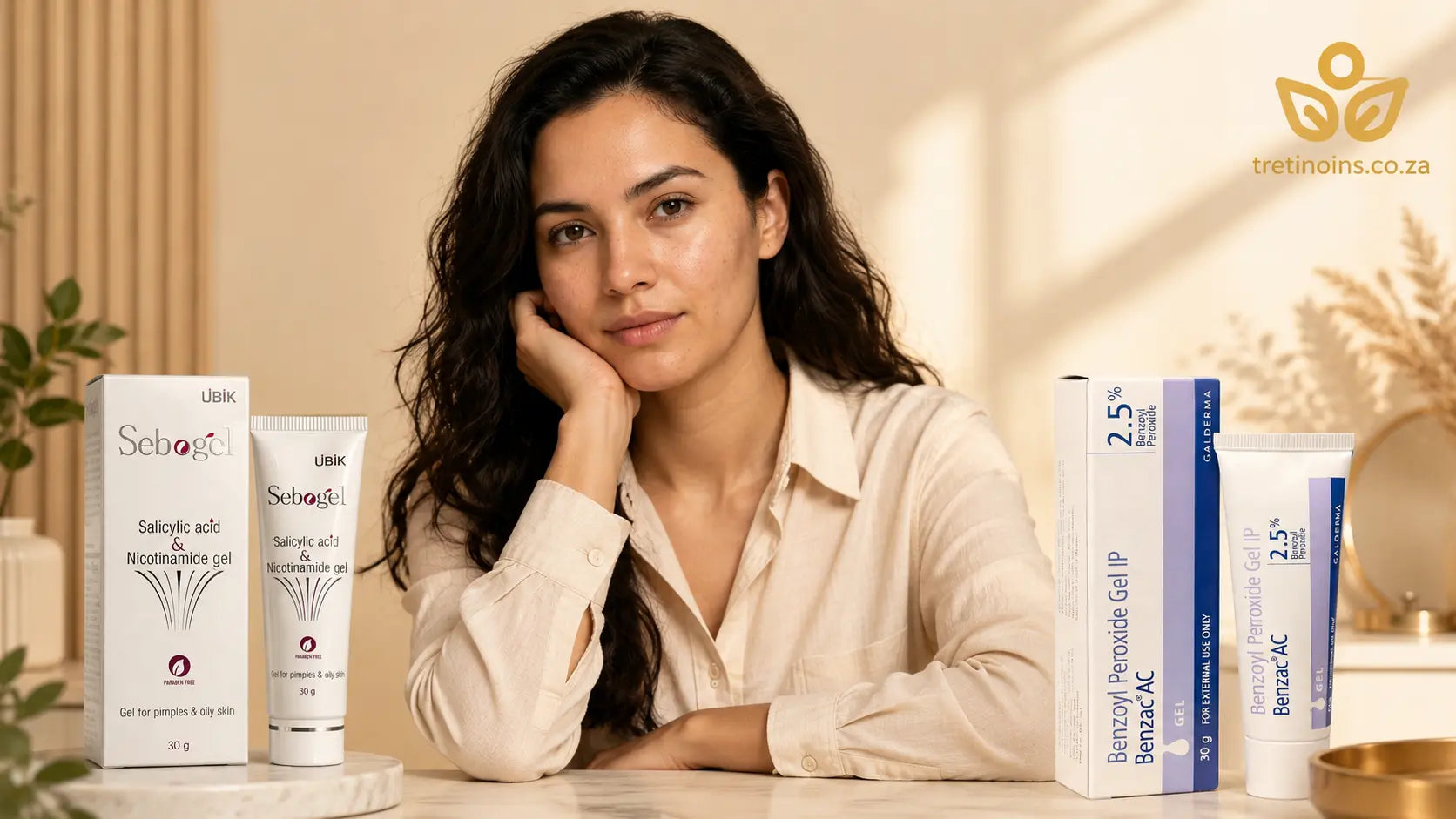
Sebogel Salicylic Acid and Nicotinamide Gel fits the salicylic acid side of this topic. It is relevant when discussing clogged pores, oily zones, blackheads, whiteheads, and repeat bumps.
The nicotinamide part also fits the wider routine conversation because comfort and visible redness matter when the skin is adjusting to actives. Still, the product context should not replace skin judgment. If the main concern is red, sore, inflamed pimples, benzoyl peroxide may fit that concern better than salicylic acid alone.
Also read for: Tretinoin 0.025 vs 0.05 | Which Strength Should You Start With
Where benzoyl peroxide fits around a tretinoin routine

Benzoyl peroxide fits best when acne looks inflamed rather than simply clogged. Around a tretinoin routine, it should be treated as a targeted acne active, not as an automatic next step. The skin needs enough comfort to keep the routine steady.
It suits red and inflamed pimples
Benzoyl peroxide may suit pimples that look red, swollen, sore, or filled with pus. These spots are different from blackheads and whiteheads because they show more inflammation.
It is often used when acne bacteria are part of the breakout pattern. In plain terms, benzoyl peroxide helps create a setting where acne bacteria struggle. This makes it more relevant for pustules and sore active spots than for simple pore congestion.
It may be too drying for some tretinoin users
Some tretinoin users already deal with dryness, peeling, stinging, or a tight skin feel. Adding benzoyl peroxide too quickly can make that discomfort stronger.
Sensitive skin may react with burning, rough patches, or more visible irritation. When the skin barrier feels stressed, acne can look angrier and marks may become more noticeable. This is why comfort matters before adding another strong acne active.
Why timing and tolerance matter more than strength
The strongest acne active is not always the best choice. Timing and tolerance matter more because the skin must be able to handle the routine.
If pimples are red and inflamed, benzoyl peroxide may have a place in the plan. If the skin is already dry, sore, or peeling, the routine may need to slow down first. A skin professional can help when acne is painful, cystic, scarring, or hard to control.
Also read about: Tretinoin 0.05% vs 0.1%: Which Strength Is Better for Skin?
Salicylic acid and benzoyl peroxide together with tretinoin
Using salicylic acid and benzoyl peroxide together with tretinoin needs careful thinking. Each active can have a useful role, but the skin may not tolerate all of them at the same time. The best routine is not the busiest one. It is the one your skin can handle without constant irritation.
Why combining actives can raise irritation risk
Tretinoin can already make the skin feel dry, tight, or sensitive, especially in the adjustment phase. Adding salicylic acid or benzoyl peroxide can place more pressure on the skin barrier.
This can lead to peeling, stinging, redness, burning, or a tight uncomfortable feel. When the barrier is stressed, acne can look more inflamed. Marks after pimples may also look more visible, especially on skin that marks easily.
Why separate routines may be safer
Separate routines can be safer because each active has a different job. Salicylic acid fits clogged pores, blackheads, whiteheads, and oily bumps. Benzoyl peroxide fits red, inflamed pimples and pustules.
This does not mean every active should be stacked together. A spacing mindset helps the routine stay calmer. Think about treating different acne concerns at different times, instead of putting every active into one routine.
When both may still have a place
Both may still have a place when the skin has mixed acne. This means clogged pores and inflamed pimples appear together. In that case, salicylic acid may support the pore care side, while benzoyl peroxide may support the inflamed spot side.
Skin tolerance should decide how far the routine goes. If the skin feels dry, sore, hot, or flaky, it may need less active pressure. If acne is painful, cystic, scarring, or hard to manage, a skin professional can help guide the next step.
Also read for: Salicylic Acid Vs Azelaic Acid
Decision map for a tretinoin user in South Africa

A tretinoin user should choose acne actives with skin tolerance in mind. This decision map can help you think through the main concern before adding more pressure to the skin.
|
Skin concern |
Better active to consider |
Why it may fit |
|
Blackheads |
Salicylic acid |
Blackheads usually start with oil and dead skin inside pores, so pore care often makes more sense. |
|
Whiteheads |
Salicylic acid |
Whiteheads are closed clogged pores, so salicylic acid may suit the early blocked pore stage. |
|
Oily T zone |
Salicylic acid |
It may fit oily areas like the forehead, nose, and chin when the skin feels congested. |
|
Red pimples |
Benzoyl peroxide |
Red pimples are more inflamed, so bacteria focused acne care may be a better match. |
|
Pustules |
Benzoyl peroxide |
Pustules often show visible inflammation and may respond better to benzoyl peroxide than salicylic acid alone. |
|
Back acne |
Depends on the acne type |
Salicylic acid may suit bumpy clogged back acne, while benzoyl peroxide may suit red sore spots. |
|
Hormonal acne pattern |
Depends on the breakout type |
Salicylic acid may suit clogged bumps, while benzoyl peroxide may suit red inflamed pimples. |
|
Sensitive skin |
Use caution with both |
A tretinoin routine can already make skin reactive, so extra actives may sting or dry the skin. |
|
Peeling skin |
Avoid adding another active first |
Peeling often means the skin barrier needs comfort before more acne treatment pressure. |
|
Acne marks after spots |
Neither as the main mark treatment |
These actives may reduce new breakouts, but SPF and irritation control matter more for marks. |
|
Mixed acne |
Both may have a place with caution |
Clogged pores and inflamed pimples may need different support, but tolerance should guide the routine. |
The main point is simple. Do not choose an active only because it sounds stronger. Choose it because it matches the acne concern and your skin can tolerate it.
Also read for: side effects of tretinoin cream
Salicylic acid vs benzoyl peroxide for acne

Tretinoin can change how the skin responds to extra acne actives. The better choice depends on the breakout type and how calm the skin feels.
For blackheads and clogged pores
- Salicylic acid vs benzoyl peroxide for blackheads usually points toward salicylic acid.
- Blackheads often start when oil and dead skin collect inside pores.
- Salicylic acid may fit this concern because it supports pore care.
- Benzoyl peroxide is less focused on simple clogged pores.
- If the skin is already dry from tretinoin, adding salicylic acid still needs caution.
- The goal is clearer looking pores without pushing the skin into peeling or stinging.
For red pimples and pustules
- Benzoyl peroxide may fit red pimples and pustules better than salicylic acid.
- These breakouts often look swollen, sore, raised, or filled with pus.
- Benzoyl peroxide is linked with bacteria focused acne care.
- Salicylic acid may not be enough when inflammation is the main concern.
- Tretinoin users should still watch for dryness, burning, and tightness.
- If inflamed acne is painful or spreading, professional advice is the safer step.
Also read for: Hydroquinone Cream for Melasma & Dark Spots
For hormonal acne patterns
- Hormonal acne can show in different ways.
- Some people get clogged bumps, whiteheads, and oily areas.
- Others get red, sore pimples around the jaw, chin, or cheeks.
- Salicylic acid may fit the clogged pore side of hormonal acne.
- Benzoyl peroxide may fit the inflamed pimple side.
- Hormonal acne may need more than one active, but that does not mean starting everything at once.
- If breakouts keep returning, a skin professional can help build a safer plan.
For back acne
- Back acne can be clogged, inflamed, or mixed.
- Salicylic acid may suit rough, bumpy, and congested back acne.
- Benzoyl peroxide may suit red, sore, and inflamed back spots.
- Sweat, tight clothing, gym wear, and friction can make body acne more irritated.
- Tretinoin users should think about overall skin tolerance, not only the breakout location.
- Benzoyl peroxide can bleach clothing, towels, and bedding, so fabric contact matters.
- If the back becomes dry, sore, or itchy, the routine may need to slow down.
Explore about: Tretinoin and Azelaic Acid: Which Works Better for Acne Marks?
What not to do in a tretinoin acne routine
A tretinoin acne routine needs patience. The skin often responds better when the routine stays calm, steady, and easy to tolerate.
Do not start several strong actives at once
- Starting tretinoin, salicylic acid, and benzoyl peroxide too quickly can overwhelm the skin.
- Too many strong actives can lead to dryness, peeling, stinging, and redness.
- Anti-Wrinkle products may also contain retinoids or exfoliating ingredients, so they should be counted when checking the full routine for irritation risk.
- More products do not always mean better acne control.
- A simple routine is often easier to continue than a harsh routine that causes irritation.
Do not use acids on peeling or broken skin
- Peeling skin needs comfort before more active treatment.
- Salicylic acid can sting more when the skin barrier already feels weak.
- Broken or sore skin may react badly to acids and acne gels.
- If the skin feels raw, flaky, or cracked, pause the extra pressure and focus on barrier comfort.
Do not ignore burning or tightness
- Burning, tightness, and strong stinging are warning signs.
- These signs can mean the skin is not tolerating the routine well.
- Ignoring discomfort can make acne look redder and more irritated. A Vitamin C Hyaluronic Sheet Mask may feel supportive in some routines, but it should not be used to push through burning, stinging, or barrier stress.
- It can also make post pimple marks look more visible on skin that marks easily.
Do not skip daily sun protection
- Daily sun protection matters in a South African tretinoin routine.
- Sun exposure can make post pimple marks look darker and harder to manage.
- Skin using acne actives may also feel more sensitive outdoors.
- SPF should be part of the routine when treating acne, clogged pores, and marks together.
Do not treat cystic acne by guessing
- Cystic acne can feel deep, painful, swollen, and slow to settle.
- It can also increase the risk of scarring and long lasting marks.
- Guessing with stronger products can make irritation worse without solving the real issue.
- If acne is painful, cystic, spreading, or scarring, speak to a skin professional for proper guidance.
When to get professional advice
Some acne routines need more than careful product choice. Best Tretinoin Strength for Flat Warts relates to a different skin concern, so it should not be used as guidance for acne, clogged pores, or inflamed pimples. This is especially true when tretinoin, salicylic acid, benzoyl peroxide, or prescription treatments are part of the same acne plan.
- Painful acne
Painful acne should not be treated by guessing. If spots feel deep, swollen, hot, or tender, a skin professional can guide the next step.
- Cystic acne
Cystic acne often sits deeper under the skin. It can feel hard, sore, and slow to settle. This type of acne may need proper support to reduce scarring risk.
- Scarring
Get advice if acne is leaving dents, raised scars, or lasting texture changes. Early guidance can help prevent more visible marks and scars.
- Pregnancy or breastfeeding
Ask a qualified professional before using tretinoin, acne actives, or prescription treatments during pregnancy or breastfeeding. This is not the time to guess with active ingredients.
- Ongoing irritation
Ongoing burning, peeling, tightness, or stinging can mean the skin barrier is struggling. If irritation keeps returning, the routine may need to change.
- No improvement after consistent care
If acne does not improve after consistent care, do not keep adding more actives. A professional can help identify the acne type and build a safer plan.
- Using prescription treatments or several actives
Extra care is needed when using prescription treatments or several acne actives together. Before deciding Where to Buy Tretinoin in South Africa, confirm whether tretinoin fits your acne type, skin tolerance, and current active routine. A professional can help decide what fits your skin, what to avoid, and when to slow down. When reviewing all products for skincare, choose by acne type, active ingredient, skin tolerance, and barrier condition rather than adding more steps at once.
FAQs
Can you use salicylic acid and benzoyl peroxide together with tretinoin?
Some people may use salicylic acid and benzoyl peroxide together with tretinoin, but it needs caution. Each active can add dryness, peeling, stinging, or tightness. If the skin feels reactive, it is safer to simplify the routine and get professional guidance.
Also read for: tretinoin cream price south Africa
Which is better with tretinoin, salicylic acid or benzoyl peroxide?
It depends on the acne concern. Salicylic acid may fit blackheads, whiteheads, oily zones, and clogged pores. Benzoyl peroxide may fit red, sore, inflamed pimples and pustules. Skin tolerance matters more than choosing the strongest active.
Should I use salicylic acid or benzoyl peroxide first?
Choose based on what your skin is showing. If the main issue is congestion, salicylic acid may make more sense. If the main issue is red inflamed pimples, benzoyl peroxide may fit better. If the skin is peeling or sore, do not rush into either one.
Can benzoyl peroxide make tretinoin irritation worse?
Yes, it can for some people. Benzoyl peroxide can feel drying, especially when the skin is already adjusting to tretinoin. If burning, peeling, or tightness gets worse, the routine may need less active pressure.
Also read about: How to Get Tretinoin Cream South Africa
Is salicylic acid better for clogged pores with tretinoin?
Salicylic acid may be a better match when clogged pores are the main concern. It suits blackheads, whiteheads, oily buildup, and small bumps under the skin. Still, it can sting or dry the skin if the barrier already feels weak.
Is benzoyl peroxide better for inflamed pimples?
Benzoyl peroxide is often a better fit for inflamed pimples. It may suit red, swollen, sore, or pus filled spots. It is less focused on simple blackheads or closed clogged pores.
Can I use these actives for back acne while using tretinoin?
Back acne can be clogged, inflamed, or mixed. Salicylic acid may suit rough and bumpy back acne. Benzoyl peroxide may suit red and sore back spots. Sweat, clothing friction, irritation, and fabric bleaching risk should also be considered.
What should I avoid when using tretinoin and acne actives?
Avoid starting several strong actives at once. Do not use acids on peeling, broken, or burning skin. Do not skip daily sun protection, especially in South Africa. Also avoid guessing with painful, cystic, or scarring acne.
Also read about: Tretinoin Strength Guide for Acne, Dark Spots, and Wrinkles
Conclusion
Salicylic acid and benzoyl peroxide can both support acne care, but they should not be added without a clear reason. Salicylic acid usually fits clogged pores, blackheads, whiteheads, oily zones, and small bumps. Benzoyl peroxide often fits red, sore, inflamed pimples and pustules.
When tretinoin is already part of the routine, skin tolerance matters more than strength. Adding too many actives too quickly can lead to dryness, peeling, stinging, burning, and a weaker barrier feel. For South African skin, this can also make post pimple marks look more visible, especially with regular sun exposure.
The best choice is the active that matches the acne concern while keeping the routine calm. If the skin is peeling, sore, or reactive, slow down before adding more. If acne is painful, cystic, scarring, or not improving with consistent care, speak to a skin professional for safer guidance.