Cart
0
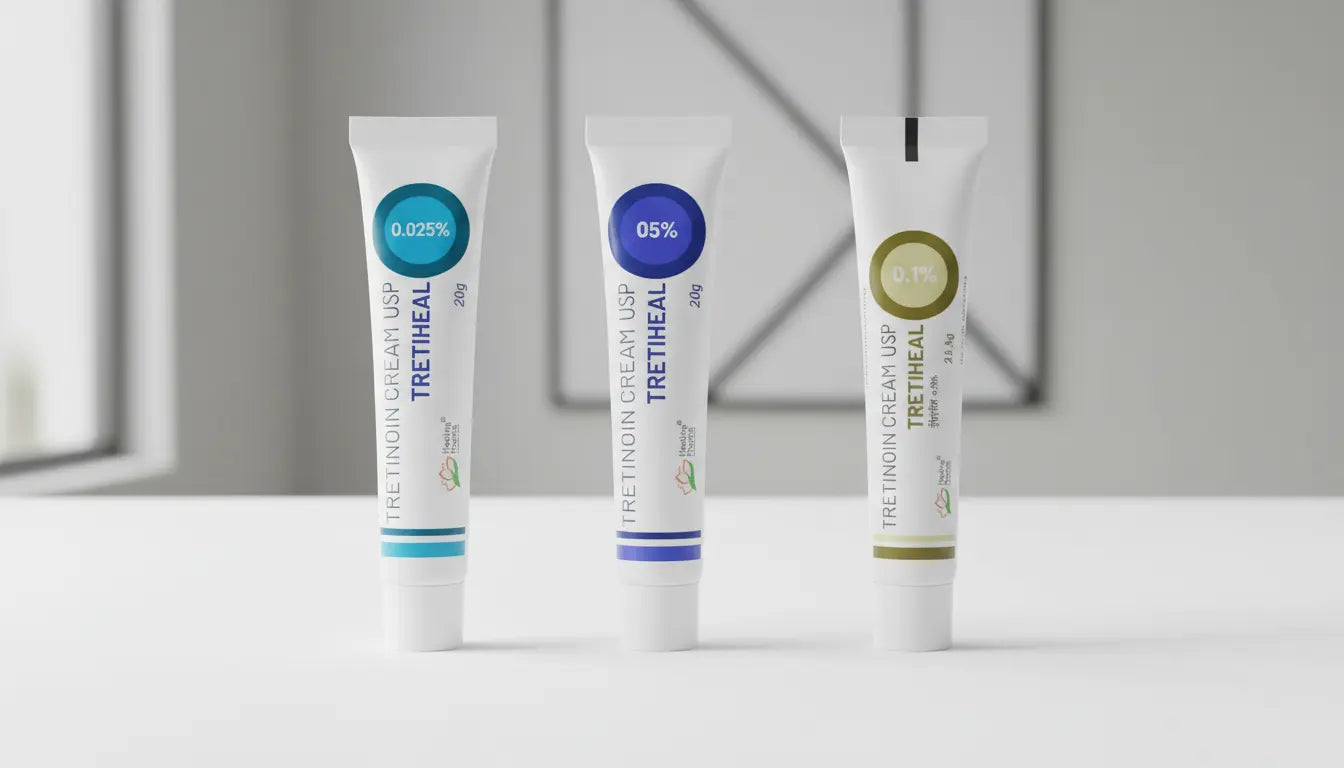
Are you unsure whether tretinoin cream 0.025% tretiheal is enough, or if tretiheal tretinoin cream 0.1% will give faster results? Many people in South Africa struggle with this exact decision. They want clearer skin, fewer dark spots, and smoother texture, but they do not know which tretinoin strength truly fits their needs.
Acne, dark spots, and wrinkles develop for different biological reasons. Acne forms inside clogged pores. Dark spots appear from excess pigment. Wrinkles show up as collagen declines. Since these concerns behave differently under the skin, one percentage does not fit all. For people dealing with persistent pigmentation, a Hyperpigmentation, Dark Spots Bundle is often used in South Africa to support more even skin tone while skin renewal improves texture.
We found that choosing the highest strength often causes irritation instead of better progress. Our analysis shows that long term consistency matters more than using the strongest option available. Based on tretinoins.co.za findings, the best tretinoin strength is the one your skin can tolerate while still targeting your main concern. This guide explains each strength clearly, so you can decide with logic instead of guesswork.
What Tretinoin Actually Does Inside the Skin

Tretinoin is all trans retinoic acid, the active form of vitamin A. It works directly on skin cells without needing conversion. Once applied, it binds to specific receptors inside the skin. These receptors control cell growth and renewal. This direct binding speeds up cell turnover. Dead cells shed faster, and new cells move up more evenly. That is why tretinoin helps clear clogged pores and reduce acne. For persistent acne marks and redness, Azelaic Acid Cream 20% w/w 15g is often used alongside renewal routines to calm inflammation, unclog pores, and fade post acne hyperpigmentation. We found that steady cell renewal improves both breakouts and overall texture.
Tretinoin also boosts collagen production. Collagen keeps skin firm and smooth. As collagen increases, fine lines soften and deeper wrinkles look less visible. Our analysis shows that this process takes time but builds lasting improvement. It helps regulate oil activity and supports clearer pores. It also spreads excess pigment more evenly, which helps fade dark spots gradually. For stubborn pigmentation and dark spots, Hydroquinone Cream 4% are also commonly used alongside retinoids to help improve overall skin tone. Based on tretinoins.co.za findings, controlled renewal works best when irritation stays low.
Higher strength does not change how the receptors work. It mainly increases dryness and redness. We found that tolerance, not just percentage, determines long term success.
Understanding Tretinoin Percentages Properly
When you see Tretin Tretinoin 0.025 percent or 0.1 percent, that number represents concentration. It does not represent the speed of results. Tretinoin works by binding to specific skin receptors. Even low strengths activate these receptors effectively. Increasing the percentage does not increase receptor activity in a straight line. This happens because of receptor saturation. Once most receptors activate, adding more concentration does not double the biological response. It mainly increases irritation.
For example:
-
0.01 percent activates receptors gently
-
0.025 percent activates them more efficiently
-
0.05 percent increases stimulation
-
0.1 percent raises irritation significantly. This is why comparisons like tretinoin 0.05% vs 0.1% focus more on irritation and tolerance rather than just strength.
The jump from 0.025 to Tretiheal Tretinoin 0.05% does not mean double the collagen. It mostly means higher dryness risk. A more detailed comparison between these two percentages is explained in Tretinoin 0.025 Vs 0.05, where the starting strength decision is discussed more closely. Skin also follows a tolerance curve. Early irritation is common. Over time, skin adapts.
We found that gradual increases protect barrier health better than aggressive starts. Our analysis suggests that strength selection should focus on tolerance first, not the highest number available. Based on our findings, steady receptor activation produces more reliable long term results than high intensity exposure.
Complete Strength Spectrum Overview
Tretinoin comes in several strengths, and each percentage serves a different purpose. The available tretinoin creams range across different concentrations. Choosing correctly depends on skin type, concern severity, and tolerance level.
Here is the full strength spectrum explained clearly.
Tretinoin 0.01 percent
-
Ideal skin type: Very sensitive or reactive skin
-
Concern match: Mild acne, early texture issues
-
Irritation level: Very low
-
Long term usability: High if skin remains sensitive
-
Suitability: Best for beginners
We found this level works well for those new to active treatments.
Tretinoin 0.02 percent
-
Ideal skin type: Sensitive to normal skin
-
Concern match: Light acne, early pigment unevenness
-
Irritation level: Low
-
Long term usability: Good for steady gradual improvement
-
Suitability: Beginner to early intermediate
This strength offers slightly more activity without major irritation.
Tretinoin 0.025 percent
-
Ideal skin type: Normal, combination, mild oily
-
Concern match: Mild acne, early wrinkles, dark spots
-
Irritation level: Mild to moderate
-
Long term usability: Very sustainable
-
Suitability: Most common starting strength
Our analysis shows this is often the practical entry point for many users.
Tretinoin 0.04 percent
-
Ideal skin type: Combination to oily
-
Concern match: Moderate acne and texture concerns
-
Irritation level: Moderate
-
Long term usability: Good if tolerated well
-
Suitability: Intermediate users
This level increases intensity without reaching high irritation territory.
Tretinoin 0.05 percent
-
Ideal skin type: Normal to oily, experienced users
-
Concern match: Moderate acne, visible wrinkles, pigmentation
-
Irritation level: Moderate to high
-
Long term usability: Sustainable with proper skin adaptation
-
Suitability: Intermediate to experienced
Based on our findings, this strength often balances collagen stimulation and acne control effectively.
Tretinoin 0.08 percent
-
Ideal skin type: Oily, resilient skin
-
Concern match: Persistent acne and deeper lines
-
Irritation level: High
-
Long term usability: Limited for sensitive skin
-
Suitability: Advanced users
This strength requires strong barrier support.
Tretinoin 0.1 percent
-
Ideal skin type: Thick, oily, highly tolerant skin
-
Concern match: Resistant acne, deeper wrinkles
-
Irritation level: Highest
-
Long term usability: Depends heavily on tolerance
-
Suitability: Experienced users only
We found that jumping to this level too early often leads to excessive peeling. Our analysis suggests that many people do not need this strength unless lower levels fail.
Based on our findings, the most effective strength is not the highest one. It is the one your skin can use consistently without barrier damage.
Best Tretinoin Strength for Acne in South Africa
Acne varies in type and severity. Blackheads behave differently from cystic breakouts. Strength selection should match the acne pattern, not just the frustration level.
Mild Comedonal Acne
Comedonal acne includes blackheads and whiteheads. These form from clogged pores without deep inflammation. In some cases, similar lower strengths are also considered when discussing best tretinoin strength for flat warts, because gradual skin renewal can help smooth certain superficial skin growths over time. For this type, 0.025 percent is often enough. It improves cell turnover and keeps pores clearer over time. We found that many users with mild acne see steady improvement at this level without needing higher strength. Lower irritation also means better consistency. When skin tolerates the product, results build gradually.
Inflammatory Acne
Inflammatory acne includes red papules and pustules. These involve bacteria and visible swelling. In these cases, 0.05 percent may become useful. It increases pore regulation and speeds renewal more aggressively. Our analysis shows that this mid range strength often helps when 0.025 percent produces only partial improvement. However, irritation risk rises. Building tolerance first remains important.
Hormonal Adult Acne
Hormonal acne often appears along the jawline and lower face. Breakouts may flare cyclically and feel deeper. 0.025 percent may control mild cases. If flare ups persist, 0.05 percent can offer stronger support. Based on our findings, long term consistency matters more than jumping to maximum strength during flare periods. Hormonal acne requires patience. Overloading the skin rarely solves the root issue.
Severe or Resistant Acne
Severe acne includes nodules, cysts, or widespread inflammation. These cases demand stronger intervention. 0.1 percent may be justified when lower strengths fail and skin tolerates treatment well. We found that this strength increases dryness significantly. It should not be the first step for most people. Tolerance building plays a key role. Starting at a lower strength allows the skin barrier to adapt. Our analysis suggests that gradual escalation reduces discontinuation rates.
Based on our findings, the best acne strength is not the highest number. It is the one that clears pores while maintaining barrier stability.
Also read for: Salicylic Acid and Azelaic Acid | Which Is Better for Acne Marks?
Best Tretinoin Strength for Dark Spots and Hyperpigmentation
Dark spots form when pigment cells produce excess melanin. This can happen after acne, sun exposure, or inflammation. Not all pigmentation behaves the same, so strength selection must stay thoughtful.
Post Inflammatory Hyperpigmentation
Post inflammatory hyperpigmentation appears after acne heals. The skin leaves behind brown or gray marks. For many people, 0.025 percent works well here. It increases cell turnover and gradually fades discoloration. We found that slow, steady renewal reduces spots without triggering new irritation.
If improvement stalls, 0.05 percent may become helpful. It speeds pigment shedding but requires careful monitoring. People comparing tretinoin for dark marks can also learn how tretinoin and azelaic acid differ for post acne pigmentation, redness, active breakouts, and sensitive skin.
Sun Damage and Uneven Skin Tone
Sun damage causes uneven tone and patchy pigmentation. Tretinoin improves texture while helping pigment distribute more evenly. Mid range strengths like 0.05 percent often deliver balanced results. Our analysis shows that stronger options do not always fade spots faster. Instead, they often increase redness, which delays visible clarity.
Melasma Considerations
Melasma involves deeper pigment changes influenced by hormones and sun exposure. This condition reacts strongly to irritation. Based on our findings, starting too strong can worsen discoloration. 0.025 percent often provides safer long term improvement. Increasing slowly may be considered only if skin tolerates treatment well.
Skin of Colour Risk Factors
Skin of colour has more active pigment cells. That means it can develop hyperpigmentation more easily after irritation. We found that higher strengths raise the risk of post inflammatory darkening in sensitive skin types. Gentle progression protects against rebound pigmentation.
Why Irritation Can Worsen Pigmentation
When skin becomes inflamed, pigment cells activate. Redness and peeling may look temporary, but repeated irritation can trigger darker patches. Our analysis suggests that barrier damage often delays pigment fading. Calm skin heals more evenly than stressed skin.
Why Mid Strength Often Ideal
Mid strengths such as 0.05 percent often strike the right balance. They improve cell renewal while keeping irritation manageable. Based on our findings, sustainable use leads to clearer tone over time.
Role of Sunscreen in South Africa
Tretinoin increases sun sensitivity. Without daily sunscreen, dark spots can return or deepen. Protection prevents new pigment formation while treatment works underneath.
Role of Barrier Protection
Moisturizers help maintain barrier stability. A strong barrier reduces inflammation and supports steady pigment correction. We found that combining moderate strength with barrier care produces more reliable brightening than aggressive dosing alone.
Best Tretinoin Strength for Wrinkles and Anti Aging

Wrinkles form as collagen declines and cell renewal slows. Tretinoin improves both processes, but strength selection affects comfort and consistency.
Early Fine Lines
Early lines usually appear around the eyes and mouth. Skin still holds decent elasticity. For this stage, 0.025 percent often works well. It supports collagen stimulation without overwhelming the barrier. We found that many users see smoother texture within a few months at this level. Collagen takes time to build. Visible softening usually appears after consistent use over several months.
Moderate Wrinkles
Moderate wrinkles show deeper lines and uneven texture. Collagen support becomes more important. 0.05 percent often becomes useful here. It increases collagen activity more noticeably than lower strengths. Our analysis shows that this mid strength frequently delivers visible improvement while remaining manageable for many skin types. Studies comparing lower and higher strengths show similar long term wrinkle reduction. The main difference appears in irritation levels.
Deep Etched Wrinkles
Deep lines result from prolonged collagen breakdown and sun exposure. 0.1 percent may be considered when skin tolerates lower strengths well. However, we found that stronger formulas increase peeling significantly. Improvement depends on sustained use, not just intensity. Based on our findings, many people benefit more from steady 0.05 percent use than short term 0.1 percent attempts.
Photoaging
Photoaging includes rough texture, uneven tone, and fine wrinkling from sun damage. Mid strengths often perform best here. They improve turnover and collagen support while allowing long term consistency. Our analysis suggests that irritation from higher strengths can slow visible progress if users reduce frequency.
Collagen Timeline and Long Term Principle
Collagen rebuilding is gradual. It does not happen in weeks. It builds over months and continues improving with steady application. We found that sustainable strength wins over aggressive dosing. Based on our findings, the most effective anti aging strategy focuses on tolerance first, then gradual progression. Mid strength often becomes the sustainable winner because it balances collagen stimulation with barrier stability.
Cream vs Gel vs Lotion vs Microsphere Technology
Strength matters, but formulation also plays a major role. The base of the product changes how tretinoin absorbs, how fast it releases, and how skin reacts.
Cream
Cream formulas use a moisturizing base. They release tretinoin in a more gradual way compared to alcohol based gels.
-
Release speed: Moderate
-
Base type: Moisturizing and water based
-
Barrier impact: More supportive
-
Best for: Dry or sensitive skin
Creams often reduce tightness and flaking. We found that many people with dryness tolerate cream better than gel, even at the same percentage.
Gel
Gel formulas often contain alcohol. They absorb quickly and feel lighter on oily skin.
-
Release speed: Faster
-
Base type: Often alcohol based
-
Barrier impact: Higher drying potential
-
Best for: Oily and acne prone skin
Our analysis shows that gel can feel stronger even at equal strength. The faster absorption may increase dryness in some users.
Lotion
Lotion formulas balance hydration and spreadability. They feel lighter than cream but gentler than gel.
-
Release speed: Controlled
-
Base type: Hydrating with lighter texture
-
Barrier impact: Moderate support
-
Best for: Combination skin
Lotions can improve tolerance in people who struggle with thick creams.
Microsphere Gel
Microsphere technology releases tretinoin slowly over time. Instead of delivering the full dose at once, it spreads release gradually.
-
Release speed: Slow and controlled
-
Base type: Gel with modified delivery system
-
Barrier impact: Often less irritation than standard gel
-
Best for: Oily or acne prone skin needing better tolerance
Based on our findings, the delivery system sometimes influences irritation more than percentage alone. A 0.05 percent microsphere formula may feel gentler than a regular 0.05 percent gel. We found that matching formulation to skin type often improves long term consistency. Percentage matters, but the base can change how that percentage behaves on your skin.
Traditional vs Compounded Formulations

Tretinoin is available in two main formats. One comes in standardized tube formulations. The other appears as custom blended versions prepared to specific strength or ingredient combinations.
Standardized Tube Formulations
Standardized formulations contain fixed strengths such as 0.025 percent, 0.05 percent, or 0.1 percent. These products follow controlled manufacturing processes.
-
Strength remains consistent in every batch
-
Texture and absorption stay predictable
-
Stability testing ensures reliable potency
-
Ingredient list remains unchanged
We found that consistency makes it easier to evaluate skin response over time. When the formula does not change, results are easier to track.
Custom Blended Versions
Custom blended formulations allow variation in strength or added supportive ingredients. These may combine tretinoin with agents that target pigmentation or oil regulation.
-
Strength can vary more precisely
-
Additional actives may support specific concerns
-
Texture can differ based on base selection
Our analysis shows that flexibility can benefit certain skin types. However, variability between batches may influence stability.
Stability and Consistency Considerations
Tretinoin is sensitive to light and air. Stability affects how well it maintains potency over time. Standardized formulas often undergo strict quality controls. Based on our findings, predictable strength and stable formulation improve long term reliability. Custom blends may offer personalization, but consistent performance depends heavily on preparation quality. Both approaches can work. The key lies in understanding how formulation stability and consistency impact overall results.
Strength Escalation Strategy
Choosing the right strength is not a one time decision. Skin responds in phases. Moving too fast often leads to irritation and setbacks.
Starting Phase
Most people begin with 0.025 percent. This allows the skin barrier to adjust to increased cell turnover.
Application frequency also matters. Gradual use reduces dryness and redness. We found that slow introduction improves long term success.
Adaptation Phase
During this stage, skin builds tolerance. Mild peeling or dryness may appear. This does not mean the product is failing. Our analysis shows that adaptation usually stabilizes after consistent use. Staying patient during this phase prevents unnecessary strength changes.
Evaluation Phase
After several months, results become clearer. Acne frequency, pigment fading, and wrinkle softening should show visible change. Many long term tretinoin routines discussed on tretinoins.co.za also follow this gradual evaluation approach before increasing strength. Based on our findings, this is the right time to assess whether the current strength meets your goals.
Escalation Criteria
Consider increasing strength only if:
-
Acne remains persistent despite consistent use
-
Wrinkles show minimal improvement
-
Dark spots fade very slowly
-
Skin tolerates current strength without ongoing irritation
We found that moving from 0.025 percent to 0.05 percent is often the next logical step when progress plateaus.
When NOT to Increase
Do not increase strength if:
-
Skin remains red or inflamed
-
Peeling continues daily
-
Burning sensation persists
-
Hyperpigmentation worsens
Our analysis suggests that irritation signals barrier stress, not under treatment.
Tolerance vs Resistance
Tolerance means skin adapts to irritation over time. Resistance is different. Tretinoin does not stop working because skin gets used to it. Based on our findings, what often feels like resistance is simply slower visible change after early improvements.
Long Term Adherence Importance
Results depend on steady use over months and years. Jumping strengths too quickly increases the chance of quitting. We found that sustainable strength produces more reliable improvement than aggressive escalation. Long term adherence always outperforms short bursts of high concentration.
Is Higher Strength Always Better for South African people?
Many people believe the strongest percentage delivers the fastest results. That sounds logical, but skin biology does not work that way. Higher strength increases irritation more than it increases effectiveness. Tretinoin activates the same receptors at lower levels. Increasing concentration mainly raises dryness, redness, and peeling.
Irritation vs Efficacy Balance
There is a balance between stimulation and tolerance. When irritation rises too high, skin becomes inflamed. Inflamed skin cannot repair efficiently. Our analysis shows that excessive peeling often reduces consistency. Missed applications slow overall progress.
Barrier Damage Risk
The skin barrier protects against water loss and inflammation. Strong irritation weakens this barrier. When the barrier weakens, sensitivity increases and pigmentation may worsen. We found that barrier damage delays visible improvement more than moderate strength ever could.
Consistency Over Intensity
Results depend on long term use. Applying 0.025 percent consistently for a year often produces better outcomes than stopping 0.1 percent after a few weeks. Based on our findings, steady stimulation builds collagen and improves tone gradually. Skin responds to regular signals, not sudden intensity.
Why Lower Strength Can Win Long Term
Lower strengths allow better adherence. Skin stays calmer. Users remain consistent. We found that many people never need the highest percentage to achieve smoother texture and clearer pores. Our analysis suggests that sustainable strength often outperforms aggressive dosing over time.
Tretinoin vs Other Retinoids: Strength Context

Not all retinoids work the same way. Understanding how each one behaves helps you judge strength more accurately.
Tretinoin vs Retinol
Retinol is an over the counter vitamin A derivative. It must convert inside the skin before becoming active retinoic acid. This conversion reduces its strength. Tretinoin does not need conversion. It binds directly to skin receptors. That direct receptor binding makes it significantly more potent than retinol at similar percentages. In simple terms, even low strength tretinoin often works stronger than higher percentage retinol.
Tretinoin vs Adapalene
Adapalene is a synthetic retinoid. It binds to fewer receptor types compared to tretinoin. This selective binding makes it more stable and often less irritating. However, tretinoin activates a broader range of receptors. That broader action improves collagen stimulation and pigmentation correction more noticeably. Our analysis shows that adapalene suits acne prone sensitive skin, while tretinoin often delivers stronger anti aging benefits.
Tretinoin vs Tazarotene
Tazarotene is considered more potent at the molecular level. It binds strongly to specific receptors linked to collagen production. This higher potency can produce faster visible changes, but irritation risk rises sharply. We found that tazarotene often feels stronger than equal strength tretinoin. In terms of hierarchy, tazarotene ranks higher in potency, followed by tretinoin, then adapalene, and finally retinol.
Tretinoin vs Oral Isotretinoin
Oral isotretinoin works systemically. It reduces oil gland activity from inside the body. Topical tretinoin works locally on the skin surface. Oral treatment targets severe acne differently. Topical tretinoin focuses on cell turnover and collagen support.
Based on our findings, topical tretinoin remains the preferred long term option for acne control, pigmentation, and wrinkle reduction when systemic treatment is not required. Each retinoid differs in conversion requirement, receptor binding pattern, and irritation profile. Strength comparison only makes sense when you understand these biological differences.
Special Skin Types and Scenarios
Not every skin type responds the same way to tretinoin. Strength must match biology, not trends.
Sensitive Skin
Sensitive skin reacts quickly to active ingredients. Redness and stinging may appear even at low percentages. For this group, 0.01 percent or 0.025 percent works best. We found that slower introduction reduces barrier stress. Gentle moisturization also supports tolerance.
Skin of Colour
Skin of colour contains more active pigment cells. This increases the risk of post-inflammatory hyperpigmentation. Stronger strengths can trigger irritation, which may worsen dark patches. Our analysis shows that gradual progression protects tone more effectively than aggressive dosing.
Rosacea Prone Skin
Rosacea prone skin already struggles with redness and inflammation. High strength tretinoin can intensify flare ups. Lower strengths with spaced applications often perform better. Based on our findings, barrier protection becomes essential in these cases.
Teens vs Adults
Teen acne often involves higher oil production. Adults may deal with both acne and early wrinkles. Teens usually respond well to 0.025 percent. Adults may move toward 0.05 percent if collagen support becomes a goal. We found that age and concern combination influences ideal strength.
Pregnancy Warning
Topical vitamin A derivatives are not recommended during pregnancy. Safety remains the priority in this stage. Avoiding retinoids completely during pregnancy is the safest approach.
Mature Skin
Mature skin has slower cell turnover and reduced collagen. It may also feel thinner and drier. Mid strengths often provide visible improvement when paired with strong barrier care. Our analysis suggests that mature skin benefits from balance rather than maximum concentration. Based on our findings, understanding your skin type matters as much as choosing the right percentage.
Realistic Results Timeline
Tretinoin works gradually. It changes how skin cells behave, and that process takes time. Expecting instant results often leads to disappointment.
Acne Timeline
In the first few weeks, skin begins adjusting to increased cell turnover. Visible acne reduction usually appears after eight to twelve weeks of consistent use. We found that comedonal acne often improves earlier than deep inflammatory breakouts. Persistent acne may require several months of steady application before major change appears. Long term use keeps pores clearer and reduces new lesion formation.
Dark Spots Timeline
Pigmentation fades more slowly than acne. Dark spots lighten as new cells replace older pigmented layers. Our analysis shows that noticeable brightening often appears after three to four months. Deeper pigmentation may take longer. Based on our findings, daily sun protection strongly influences how fast dark spots fade. Without protection, progress slows.
Wrinkles Timeline
Wrinkle improvement depends on collagen rebuilding. Collagen production increases gradually. Fine lines may soften within three to six months. Deeper wrinkles require longer consistent use. We found that visible structural improvement often appears after six months or more. Based on our findings, patience and consistency determine outcome more than strength alone.
Decision Matrix: How to Choose the Right Strength

Choosing the right strength becomes easier when you follow a simple logic. Match your main concern, skin type, and experience level. Different strengths and formulations are usually grouped in skincare collections such as the all collections section, where tretinoin products are organized by type and strength.
Here is a clear decision guide.
If you have mild acne → Consider Tretinoin 0.025 percent
-
Suitable for blackheads and small breakouts
-
Good starting point for most people
-
Lower irritation risk
If you have moderate acne → Consider Tretinoin 0.05 percent
-
Helpful for persistent breakouts
-
Stronger pore regulation
-
Move up only after building tolerance
If you have severe or resistant acne → Consider Tretinoin 0.1 percent
-
Best for experienced users
-
Use only if lower strengths fail
-
Monitor skin closely for dryness
If you want to treat early wrinkles → Consider Tretinoin 0.025 percent
-
Supports collagen gently
-
Sustainable long term
If you have visible wrinkles or photoaging → Consider Tretinoin 0.05 percent
-
Stronger collagen stimulation
-
Balanced option for many skin types
If dark spots are your main concern → Start with Tretinoin 0.025 percent
-
Lower irritation reduces pigment risk
-
Increase slowly if fading plateaus
If you are a beginner → Start with Tretinoin 0.025 percent
-
Allows skin to adapt
-
Easier to stay consistent
If you are experienced and tolerant → Consider Tretinoin 0.05 percent
-
Suitable after stable adaptation
-
Do not rush escalation
If irritation occurs → Adjust before increasing
-
Reduce frequency
-
Support barrier with moisturizer
-
Avoid jumping to higher strength
We found that most people fall into the 0.025 to 0.05 percent range. Our analysis suggests that this range covers acne, pigmentation, and early aging concerns effectively. Based on our findings, the right strength is not the highest number. It is the level that matches your concern and remains tolerable for long term use.
Frequently Asked Questions (FAQ's)
Is tretinoin 0.025 effective for wrinkles?
Yes, 0.025 percent can improve fine lines. It stimulates collagen and smooths texture over time. We found that many users see visible softening with steady use. Results build gradually, so patience matters.
What is the strongest tretinoin cream?
The strongest commonly available topical strength is 0.1 percent. This level increases cell turnover more aggressively. It also raises irritation risk significantly.
What is the highest percentage of tretinoin?
For topical use, 0.1 percent is typically the highest standard concentration. Higher percentages do not automatically mean better long term results.
What is the best strength of tretinoin to use?
The best strength depends on your concern and tolerance. Our analysis shows that 0.025 to 0.05 percent works well for most people. Based on our findings, the ideal strength is the one you can use consistently without ongoing irritation.
Can 0.025 percent clear acne long term?
Yes, mild to moderate acne often responds well to 0.025 percent. We found that steady use keeps pores clearer over time. Severe acne may require stronger options.
Is 0.1 percent too strong for daily use?
For many skin types, yes. Daily use of 0.1 percent can cause dryness and peeling. It suits experienced users who already tolerate lower strengths.
Does higher strength fade dark spots faster?
Not always. Stronger percentages increase irritation risk. Our analysis suggests that excessive irritation may slow pigment improvement instead of speeding it up.
Can irritation worsen pigmentation?
Yes. Inflammation can trigger pigment cells to produce more melanin. Based on our findings, calm and controlled treatment reduces this risk.
When should you move from 0.025 to 0.05?
Consider increasing only if results plateau after consistent use and your skin shows stable tolerance. We found that premature escalation often causes setbacks.
Is gel stronger than cream?
The percentage determines strength, not the base. However, gel often feels stronger because it absorbs faster and may dry the skin more.
Can you stay on 0.05 percent forever?
Yes, if your skin tolerates it well. Many people maintain long term improvement at this level without needing to increase further.
Is 0.01 percent stronger than retinol 0.1 percent?
Yes. Tretinoin works directly as active retinoic acid. Retinol must convert inside the skin. Even low strength tretinoin often acts more powerfully than higher percentage retinol.
Does skin become resistant to tretinoin?
No. Skin builds tolerance to irritation, not resistance to its effects. Our analysis shows that slowed visible change usually reflects gradual improvement, not loss of efficacy.
Conclusion
The best tretinoin strength is not the highest one. It is the lowest effective level your skin can tolerate consistently. Acne, dark spots, and wrinkles need different approaches. Strength should match your main concern and skin type. Moving too fast often leads to irritation, not better results. We found that steady use at a tolerable percentage delivers more visible improvement over time. Our analysis shows that mid range strengths often provide the best balance for most people. Based on our findings, consistency beats intensity. Choose the strength you can maintain long term, and let gradual improvement build real results.