Cart
0
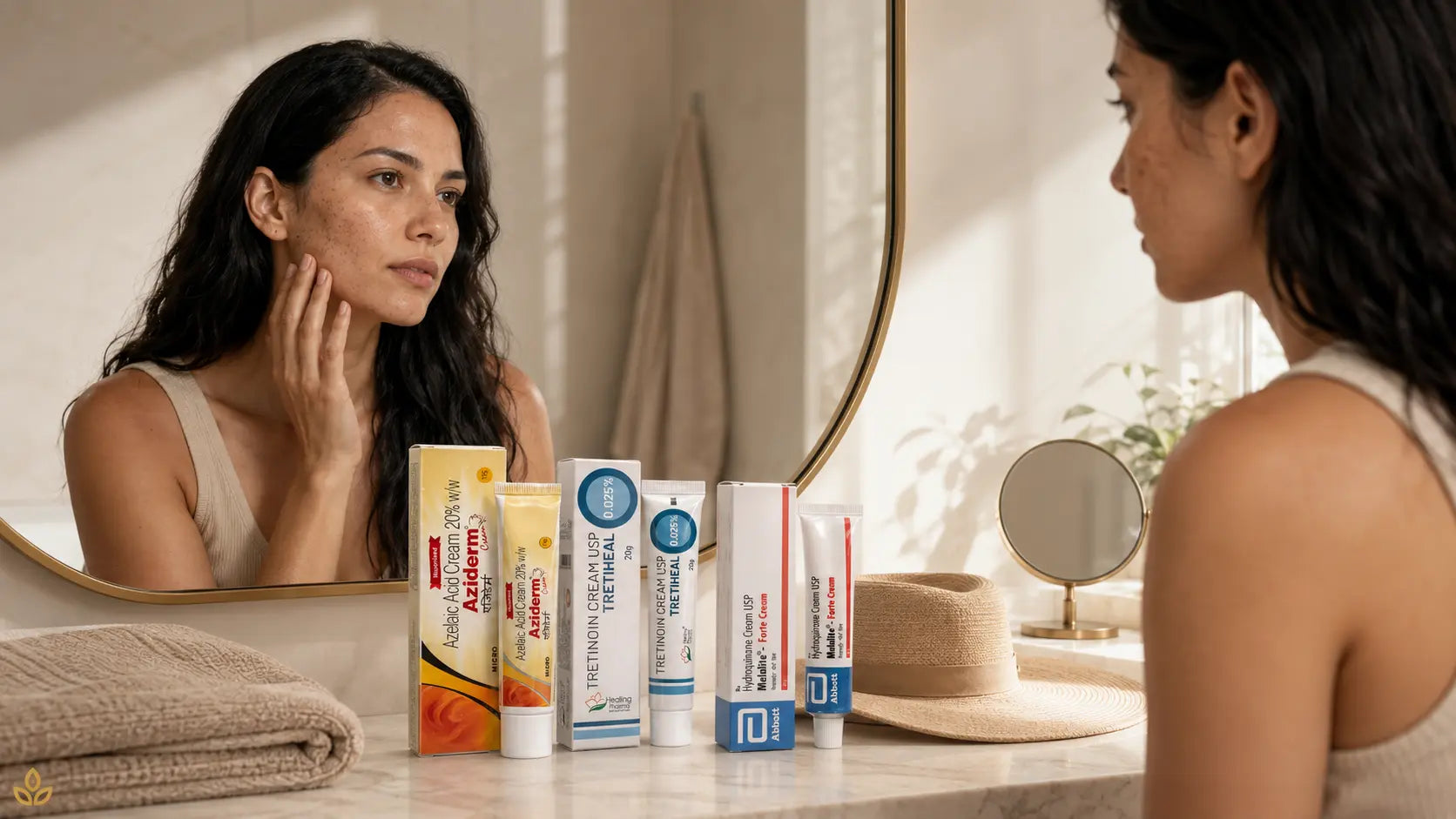
Dark spots often last much longer than the pimple, bite, or irritation that caused them. For many people with melanin-rich skin, the mark can become the biggest concern even after the skin has healed. The good news is that fading pigmentation does not mean using the strongest products or scrubbing the skin harder.
At Tretinoins, we found that the safest approach is to control what keeps creating new marks first. Pigment usually fades better when the skin stays calm, protected from daily sun exposure, and supported with the right active ingredients instead of an aggressive routine.
Melanin-rich skin responds differently to inflammation. Acne, shaving bumps, eczema, insect bites, burns, and harsh skincare can all trigger extra pigment during the healing process. This is why brown, Black, olive, and many South Asian skin tones often develop dark marks that remain long after the original problem has gone.
The goal is not to attack the pigmentation. It is to reduce the triggers, strengthen the skin barrier, use sunscreen every day, and introduce proven ingredients carefully. With patience and a consistent routine, many dark spots can become much less noticeable over time.
Start by reading the mark, not choosing a product

Choosing a treatment too early can waste time and irritate the skin. Not every dark mark needs the same approach. The first step is to identify the type of pigmentation. This helps you choose ingredients that match the real cause.
Brown marks after acne
Brown marks left after pimples are usually called post-inflammatory hyperpigmentation (PIH). These marks are flat and are not true acne scars. They develop because inflamed skin produces extra melanin while healing. This is why darker skin tones often keep marks longer than the acne itself.
PIH can also develop after shaving bumps, insect bites, or skin picking. New breakouts can create fresh marks before old ones fade. Treating acne early helps reduce this cycle. A gentle routine gives the skin a better chance to recover.
Patchy facial pigmentation
Patchy brown areas on the cheeks, forehead, nose, or upper lip are often linked with melasma. Hormonal changes, sunlight, and heat can all trigger it. Even after it fades, melasma may return if these triggers continue. That is why long-term care is important.
Daily sun protection is one of the most helpful steps. Gentle skincare also helps lower irritation. Strong treatments are not always the best choice. A steady routine usually gives better long-term results.
Grey-blue or very dark patches
Grey, blue, or very dark brown patches often sit deeper in the skin. These marks usually fade more slowly than surface pigmentation. Improvement may take several months with consistent care. Quick fixes rarely work for deeper pigment.
Using several strong products together can make things worse. Irritation may trigger even more pigmentation. It is better to introduce one active ingredient at a time. Patience often brings better results than aggressive treatment.
Rough texture, raised scars, and indented scars
Not every acne mark is caused by excess pigment. Raised scars, keloids, and indented scars change the skin's texture instead. Pigment-fading ingredients cannot repair these structural changes. They need a different treatment approach.
Tretinoin may improve overall skin renewal over time. However, deep scars often need professional treatments. Chemical peels, micro needling, or laser procedures may be considered. Knowing the difference helps you choose the right treatment plan.
Also read: Salicylic Acid Vs Benzoyl Peroxide for Acne Prone Skin
Why melanin-rich skin needs a slower fading plan
Inflammation can switch on pigment
Melanin-rich skin reacts strongly when it becomes inflamed. Pimples, burns, cuts, shaving bumps, and insect bites can all trigger extra pigment. Even picking at healing skin can leave a dark mark behind. The more inflammation the skin faces, the greater the chance of long-lasting pigmentation.
New irritation can also slow the fading of older marks. This creates a cycle where fresh pigmentation appears before existing marks have faded. Keeping acne under control helps break that cycle. Calmer skin usually fades more evenly over time.
Sun and visible light keep pigment active
Sunlight does more than cause new pigmentation. It can also keep existing dark spots looking darker for longer. Visible light may have the same effect in many people with darker skin tones. This is why sunscreen is part of treatment, not just prevention.Daily SPF helps protect the progress your skincare routine is making. It gives fading ingredients a better chance to work.
Learn more about choosing the right Sunscreen for Hyperpigmentation to help protect dark spots from becoming darker during treatment. Reapply sunscreen if you spend time outdoors or sweat heavily. Consistent protection is just as important as the active ingredients you use.
Harsh treatment can create the next dark mark
Using strong products too often can irritate melanin-rich skin. Burning, peeling, and stinging are signs that the skin barrier is under stress. When this happens, the skin may produce even more pigment while it heals. This can leave another dark mark behind.
Many people try to fade marks by using several actives at once. That approach often causes more irritation than improvement. It is safer to introduce one active ingredient at a time. A slower routine usually gives better long-term results.
Read about: Tretinoin 0.05% vs 0.1%: Which Strength Is Better for Skin?
The three triggers to control before fading starts

Active acne and clogged pores
Before trying to fade dark spots, control the acne that is creating them. Focus on these steps:
-
Treat new pimples as early as possible to reduce inflammation.
-
Keep pores clear to lower the risk of future breakouts.
-
Avoid leaving active acne untreated while focusing only on pigmentation.
-
If needed, ingredients such as salicylic acid or tretinoin may help manage acne while reducing the chance of fresh marks forming.
Sun exposure, heat, and sweat
Daily sun protection is essential because sunlight can keep pigmentation active. These habits help protect fading progress:
-
Wear a broad-spectrum sunscreen every morning.
-
Reapply SPF after heavy sweating or spending long periods outdoors.
-
Use a hat or stay in the shade during the strongest sun where possible.
-
Heat and prolonged sun exposure can make existing dark spots last longer.
Barrier damage from too many actives
A damaged skin barrier can slow fading and increase pigmentation. Keep these points in mind:
-
Avoid starting several strong active ingredients at the same time.
-
Burning, peeling, tightness, and stinging are signs that the skin needs a break.
-
Give your skin time to adjust before adding another treatment.
-
Healthy, well-protected skin usually responds better to pigmentation treatments than irritated skin.
Explore about: Hydroquinone + Tretinoin + Mometasone
Ingredient roles in a pigmentation routine
Sunscreen protects the result
Sunscreen is the most important step in any pigmentation routine. It helps stop existing dark spots from becoming darker while protecting the progress made by other treatments. SPF should be seen as part of treatment, not just daily prevention. Without it, even the best fading ingredients may give slower results.
For the best protection, choose a broad-spectrum SPF 50 sunscreen. Reapply it after heavy sweating, swimming, or spending long hours outdoors. Visible light can also affect pigmentation in darker skin tones, so daily use matters throughout the year. The South African National Department of Health (NDoH) also encourages protecting the skin from excessive ultraviolet (UV) exposure as part of reducing sun-related skin damage.
Using sunscreen together with shade, protective clothing, and hats can help limit further UV exposure while you work on fading existing pigmentation. A sunscreen that feels comfortable on your skin is more likely to be used consistently.
Azelaic acid helps with acne marks and uneven tone
Azelaic acid 20% is a good option for post-acne marks and uneven skin tone. It can also suit people who still experience regular breakouts. Compared with many stronger treatments, it is often easier for sensitive skin to tolerate. This makes it a useful choice for long-term pigment care.
Results develop gradually with consistent use. It is best introduced slowly to reduce irritation. Daily sunscreen helps support the fading process while using azelaic acid. Patience usually brings better results than increasing the frequency too quickly.
Tretinoin supports turnover and texture
Tretinoin collection works by increasing skin cell turnover over time. It may help improve acne marks, uneven texture, and overall skin renewal. Because it is a strong retinoid, it should be introduced slowly. Using it too often at the beginning can increase irritation.
Apply tretinoin only at night on clean, dry skin. Follow with a moisturiser if your skin feels dry or tight. Sunscreen every morning is essential because tretinoin can increase sun sensitivity. Many people start with a lower strength before moving to stronger options if needed. Our Tretinoin Strength Guide for Acne, Dark Spots, and Wrinkles explains how each strength fits different skin concerns and tolerance levels.
Hydroquinone targets stubborn pigment but needs care
Hydroquinone 4% is mainly used for stubborn pigmentation and melasma. It is not designed for everyday or long-term use without guidance. Most people use it for limited treatment cycles rather than continuously. This helps reduce the risk of unwanted side effects.
Using hydroquinone too often can irritate the skin. Irritation may trigger more pigmentation, especially in darker skin tones. Stop using it if burning or severe redness develops. Professional advice is recommended for long-term treatment plans. Some routines also include Tretinoin and Azelaic Acid to support acne marks, uneven texture, and pigmentation while introducing active ingredients gradually.
Salicylic acid and niacinamide help when acne keeps causing marks
If active acne is still creating new marks, treating the acne should come first. Salicylic acid helps clear clogged pores and reduce excess oil. Niacinamide supports the skin barrier and helps improve uneven skin tone. Together, they can help reduce the cycle of breakouts and fresh pigmentation. Our guide on Salicylic Acid and Azelaic Acid explains how these ingredients can work together for acne prone skin with post acne marks.
These ingredients work best as part of a simple routine. Avoid combining too many drying products at the same time. Once acne becomes more controlled, older marks often become easier to fade. Healthy skin responds better to pigment treatments.
Triple-combination creams need the right situation
Triple-combination skinshine or triluma creams are usually reserved for stubborn melasma or difficult pigmentation. They often contain several prescription ingredients that work together. Because they are powerful, they are not suitable for every dark spot. They should not be used as a first treatment for mild pigmentation.
These creams carry a higher risk of irritation if used incorrectly. Strong reactions can sometimes make pigmentation harder to manage. They are generally best used under medical supervision and for the recommended treatment period. A safer approach is always to start with gentler options before considering combination therapy.
Visit also: Tretinoin 0.025 vs 0.05 | Which Strength Is Right for Your Skin
Choose the right path for your type of pigmentation

Path 1: Acne marks with oily skin
If you still get regular breakouts, treat the acne before focusing on the marks. A simple routine can help reduce new pigmentation while older marks fade.
-
Control active acne to reduce new dark spots.
-
Use salicylic acid to help keep pores clear.
-
A retinoid such as tretinoin may help improve acne and skin renewal over time.
-
Wear broad-spectrum sunscreen every morning.
-
Avoid picking or squeezing pimples.
Path 2: Dark patches or melasma
Melasma and larger dark patches often need a long-term approach. Gentle treatment and daily protection usually work better than aggressive routines.
-
Wear SPF every day and reapply when needed.
-
Azelaic acid may help improve uneven pigmentation.
-
Hydroquinone or triple-combination creams should only be used with caution.
-
Reduce heat and sun exposure where possible.
-
Stay consistent instead of changing products too often.
Path 3: Sensitive skin with uneven tone
Sensitive skin needs a routine that protects the skin barrier first. Too many active ingredients can make pigmentation harder to manage.
-
Keep your routine simple and gentle.
-
Use fewer active ingredients at one time.
-
Support the skin barrier with a good moisturiser.
-
Azelaic acid is often a suitable option for sensitive skin.
-
Apply sunscreen every morning.
Path 4: Texture plus pigmentation
If you have rough skin texture as well as dark marks, your routine should support both concerns. Improvement usually happens gradually.
-
Tretinoin can help improve skin renewal and texture.
-
Start with a low frequency to reduce irritation.
-
Use a moisturiser to manage dryness and peeling.
-
Wear sunscreen every morning.
-
Increase tretinoin use only if your skin stays comfortable.
Visit for: Hydroquinone Cream South Africa for Melasma & Dark Spots
How to build a routine without making pigmentation worse
Morning plan
A simple morning routine helps protect your skin throughout the day. Keep the focus on preventing new pigmentation while supporting the fading process.
-
Cleanse with a gentle, non-drying cleanser.
-
Apply one pigment-support ingredient if your skin tolerates it.
-
Use a moisturiser if your skin feels dry or tight.
-
Finish with a broad-spectrum SPF 50 sunscreen every morning.
Night plan
Night is the best time to use your main treatment. Starting slowly helps reduce irritation and makes the routine easier to maintain.
-
Cleanse to remove sunscreen and daily buildup.
-
Apply one active ingredient only, such as tretinoin or azelaic acid.
-
Start with a low frequency and increase gradually if tolerated.
-
Finish with a moisturiser to support the skin barrier.
Weekly plan
Adding too many treatments at once can slow progress. Give your skin time to adjust before introducing another active.
-
Do not layer tretinoin, acids, hydroquinone, and exfoliants together.
-
Introduce one new active ingredient at a time.
-
Leave several weeks before adding another treatment.
-
Keep the routine simple if your skin becomes sensitive.
What to pause when skin burns or peels
Burning and peeling are signs that your skin needs a break. Focusing on recovery often gives better long-term results than pushing through irritation.
-
Reduce how often you use active ingredients.
-
Pause harsh exfoliants and unnecessary treatments.
-
Keep using a gentle cleanser and moisturiser.
-
Restart active ingredients slowly once the skin feels comfortable again.
Also visit for: tretinoins all products
What to avoid with darker skin tones

Strong peels without professional guidance
Strong chemical peels are not suitable for everyone with darker skin tones. Using the wrong type or strength can cause irritation and trigger more pigmentation. Deeper peels also carry a higher risk of uneven healing. Always seek professional advice before choosing this type of treatment.
Lasers from providers without darker-skin experience
Not every laser is safe for melanin-rich skin. The wrong settings can lead to burns, scarring, or long-lasting pigmentation. Experience with darker skin tones is just as important as the laser itself. Always choose a qualified provider who regularly treats darker skin.
Bleaching mixtures and unlabeled lighteners
Avoid using bleaching products with unknown ingredients. Some may contain hidden steroids, mercury, or other harmful substances. These products can damage the skin and make pigmentation harder to treat. Always use clearly labelled treatments from trusted sources.
Daily exfoliation while using tretinoin
Tretinoin already increases skin cell turnover. Adding daily exfoliation can damage the skin barrier and cause burning or peeling. Too much irritation may lead to even more pigmentation. Keep exfoliation to a minimum unless advised by a healthcare professional.
Treating melasma like a simple acne mark
Melasma is different from post-acne pigmentation. It is often linked with hormones, sunlight, and heat, so it can return after fading. Treating it like a normal acne mark may lead to disappointing results. A long-term plan with daily sun protection usually works much better.
Explore also: Tretinoin Gel Products
How to judge progress safely
What improvement can look like
Pigmentation usually fades little by little rather than all at once. Looking for small changes makes it easier to see if your routine is working. Signs of progress may include:
-
Dark marks begin to look lighter.
-
The edges of the marks become less noticeable.
-
Your overall skin tone starts to look more even.
-
Fewer new acne marks appear over time.
Why progress may look slow
Pigmentation often takes time to improve, especially on melanin-rich skin. Some marks naturally fade more slowly than others. Progress may be slower because of:
-
Deeper pigment beneath the skin.
-
Melasma that keeps returning.
-
Active acne creates new dark marks.
-
Missing sunscreen or not reapplying it consistently.
When to adjust the routine
Not every routine works the same for every person. If your skin is not improving, it may be time to make careful changes instead of adding more products. Consider reviewing your routine if:
-
There is little or no improvement after several weeks of consistent use.
-
Burning, peeling, or ongoing irritation develops.
-
New dark marks continue to appear.
-
Pigmentation starts spreading or changing in appearance.
You can visit for: Hyperpigmentation & Dark Spots Bundle
When stronger treatment may be needed
Stubborn melasma
Melasma can be difficult to control because it is often linked with hormones, heat, and sunlight. Even after it fades, it may return if these triggers continue. Some people need prescription treatments when a basic routine is not enough. Daily sunscreen remains an important part of long-term control.
Deep pigmentation
Deep brown, grey, or blue-toned pigmentation usually takes longer to improve. Surface skincare may help, but results are often slower than with fresh acne marks. A dermatologist may recommend stronger treatments if progress is limited. Avoid increasing active ingredients too quickly, as irritation can make pigmentation worse.
Pigmentation after burns, cuts, or procedures
Pigmentation that develops after burns, cuts, or cosmetic procedures needs extra care. The skin should heal properly before stronger treatments are introduced. Starting treatment too early may delay healing or increase irritation. A healthcare professional can help decide when it is safe to begin treatment.
Chemical peels and lasers for darker skin
Chemical peels and lasers can help some types of stubborn pigmentation. However, they must be selected carefully for melanin-rich skin. The wrong peel, laser, or treatment setting can increase the risk of burns, scarring, or new pigmentation. Always choose an experienced provider who regularly treats darker skin tones and uses settings that are appropriate for your skin type.
FAQs About Fading Pigmentation on Darker Skin
Why do dark spots last longer on melanin-rich skin?
Melanin-rich skin produces more pigment while healing after inflammation. Pimples, cuts, burns, and irritation can all leave dark marks behind. These marks often fade more slowly than they do on lighter skin tones. A gentle routine and daily sunscreen can help improve them over time.
Is tretinoin good for dark marks?
Yes, tretinoin can help improve dark marks by increasing skin cell turnover. It may also reduce new acne breakouts that can lead to more pigmentation. Start with a low frequency to reduce irritation. Always use sunscreen during the day while using tretinoin. People using tretinoin for other skin concerns can also read our Tretinoin Strength for Flat Warts guide to understand how different strengths are commonly used.
Is azelaic acid better than hydroquinone for darker skin?
The better choice depends on your skin concern. Azelaic acid is often suitable for post-acne marks, uneven tone, and sensitive skin. Hydroquinone is usually reserved for stubborn pigmentation or melasma and should be used with care. A healthcare professional can help decide which option is most appropriate.
Can hydroquinone be used on dark skin?
Yes, hydroquinone can be used on darker skin tones when it is used correctly. It is usually recommended for limited treatment periods rather than continuous use. Using it for too long or too often may increase irritation. Professional guidance is recommended for the safest results.
Should I use SPF even if I stay indoors?
Yes. UVA rays can pass through windows, and visible light may also affect pigmentation in darker skin tones. Daily sunscreen helps protect the progress made by your treatment routine. This makes SPF an important part of pigment control, even indoors.
Can salicylic acid fade pigmentation?
Salicylic acid mainly treats clogged pores and oily skin rather than pigmentation itself. By reducing acne breakouts, it helps prevent new dark marks from forming. This gives older marks a better chance to fade. It is often used alongside other pigment-support ingredients.
Why does melasma keep coming back?
Melasma is commonly linked with hormones, sunlight, and heat. Even after it fades, these triggers can cause it to return. Daily sunscreen and long-term skin protection help lower the risk of recurrence. Consistency is usually more effective than changing treatments often.
What should I do if my routine makes my skin darker?
Stop using products that are causing burning, peeling, or severe irritation. Focus on a gentle cleanser, moisturiser, and daily sunscreen until your skin recovers. Once the skin barrier feels healthy again, reintroduce active ingredients slowly. If the pigmentation continues to worsen, seek medical advice.
Can azelaic acid fade dark spots?
Yes. Azelaic acid can gradually improve post-inflammatory hyperpigmentation and uneven skin tone. It is also suitable for many people with acne-prone or sensitive skin. Daily sunscreen helps improve the results over time.
What will fade dark spots fast?
There is no treatment that removes dark spots overnight. The best results usually come from treating the cause, wearing sunscreen every day, and using proven ingredients consistently. Trying to speed up the process with harsh products often causes more irritation. A steady routine is usually the safest and most effective approach.
Conclusion
Dark spots on darker skin tones fade best when the focus is on preventing new pigmentation, protecting the skin every day, and using proven ingredients with care. A simple routine with daily sunscreen, patience, and gradual use of treatments such as tretinoin or azelaic acid often gives better long-term results than aggressive skincare. If pigmentation continues to spread, becomes deeper, or does not improve despite consistent care, speak to a healthcare professional about the safest treatment options.