Cart
0
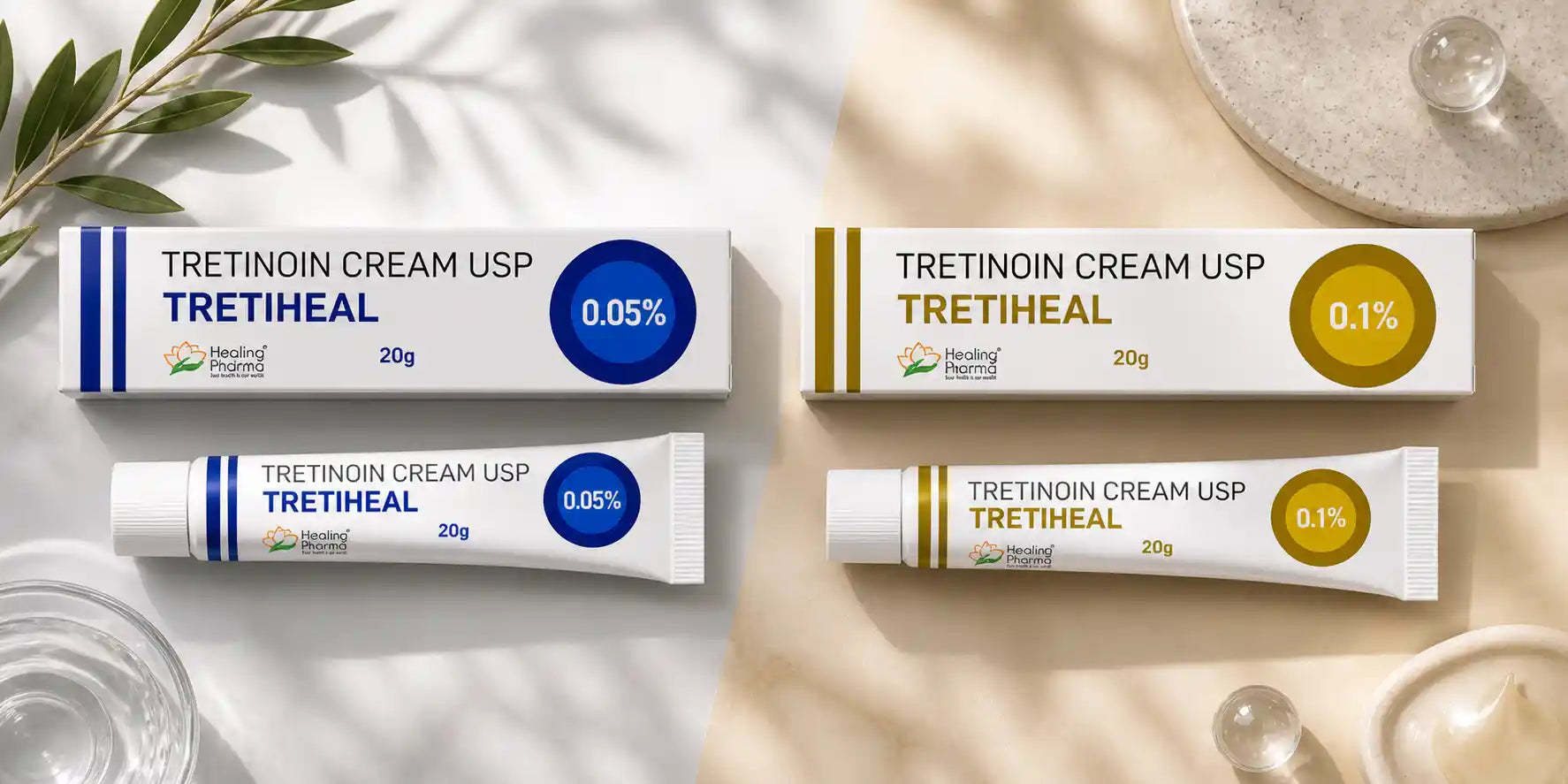
Choosing between tretinoin cream 0.05% and tretinoin cream 0.1% is not a small decision. The difference is not just a number. It affects irritation, skin renewal intensity, and long term comfort.
Many people assume that 0.1 must be better because it is stronger. That logic sounds simple, but skin does not always respond that way. Higher strength can increase dryness, redness, and peeling without improving long term results. There is also a constant debate between speed and tolerance. Some want faster acne control or wrinkle improvement. Others want steady progress with fewer side effects.
We found that this balance often determines who succeeds long term. Our analysis shows that both strengths can deliver strong results when used consistently. Based on our findings, long term adherence matters more than short term intensity. This guide will break down 0.05 vs 0.1 clearly. Insights shared on tretinoins.co.za also highlight how strength selection impacts long term skin tolerance and results.
You will understand who benefits from each strength, what risks to expect, and how to choose logically based on your skin type and goals. This also helps in choosing the right tretinoin strength for acne and dark spots based on real skin response.
Tretinoin Cream 0.05% vs 0.1%: Side by Side Strength and Tolerance Comparison

Below is a focused comparison of tretinoin cream 0.05 and 0.1 based on potency, irritation profile, and long term usability. This table highlights where the real differences appear and where results often overlap.
| Factor | Tretinoin 0.05% | Tretinoin 0.1% |
|---|---|---|
| Potency | Moderate strength | Highest topical strength |
| Acne | Moderate acne | Severe or resistant acne |
| Wrinkles | Fine to moderate wrinkles | Deep or etched wrinkles |
| Photoaging | Moderate sun damage | Severe sun damage |
| Irritation | Usually manageable | Often high |
| Dryness | Moderate dryness | Significant dryness |
| Peeling | Mild to moderate peeling | Frequent peeling |
| Redness | Occasional redness | More intense redness |
| Skin Renewal | Steady acceleration | Faster acceleration |
| Tolerance Needed | Moderate tolerance | High tolerance required |
| Long Term Results | Comparable after one year | Comparable after one year |
| Best For | Most skin types | Thick or highly tolerant skin |
We found that the real difference shows in early weeks, especially in irritation and dryness levels. Many users assume stronger means better, but comfort often determines long term success. Choosing based on skin tolerance usually leads to better consistency and fewer setbacks. Many beginners first compare tretinoin 0.025% vs 0.05% before considering stronger options like 0.1%.
How 0.05% and 0.1% Work Inside the Skin
Both 0.05% and 0.1% contain all trans retinoic acid, the active form that works directly inside the skin. After application, it binds to specific retinoic acid receptors within skin cells and changes how those cells grow and renew. This direct receptor binding is what makes tretinoin more potent than many other topical retinoids.
Both strengths accelerate cell turnover. Old and damaged cells shed faster, and new cells move to the surface more quickly. This process helps unclog pores, reduce acne breakouts, and smooth uneven texture. In dermatology use, tretinoin cream strength for flat warts is also considered in specific treatment cases. At the same time, collagen production increases. Over months of consistent use, this supports firmer skin and softens the look of wrinkles.
Pigmentation also improves through this steady renewal process. Because of this, it is often grouped with skin brightening products targeting uneven tone and discoloration. As damaged cells caused by sun exposure are replaced, skin tone becomes more even. Oil regulation improves as well, which further supports acne control.
The key difference between 0.05% and 0.1% is intensity, not mechanism. Both work through the same biological pathway. The 0.1% strength simply pushes that pathway harder. This leads to stronger dryness, redness, and peeling in many users.
Our analysis shows that collagen stimulation does not increase in a straight line with higher concentration. This relates to receptor saturation. The skin has a limited number of receptors available. Once most receptors are activated, adding more concentration mainly increases irritation rather than long term collagen benefit.
Tretinoin 0.05% Cream: Who Is It Best For?
Tretin cream 0.05% is often considered a balanced strength. It delivers meaningful results without pushing the skin too aggressively. This makes it suitable for people who want visible improvement but still value comfort. It works well for moderate acne. This makes it a common choice in anti-acne & anti-wrinkle treatments where balanced results are needed. Pore congestion improves as cell turnover increases. Breakouts reduce steadily with consistent use. Many users see clearer skin without extreme peeling.
For fine lines and early wrinkles, 0.05% offers reliable collagen stimulation. Over time, skin looks smoother and firmer. Texture becomes more refined. Early signs of photoaging respond well at this strength. It also helps with uneven tone and pigmentation. As damaged cells shed gradually, dark spots soften and tone becomes more uniform. This happens through steady skin renewal rather than sudden intensity.
Skin types that tolerate 0.05% well usually include normal, combination, and mildly oily skin. It can also suit resilient dry skin when proper barrier protection is maintained. We found that 0.05 provides balanced collagen stimulation. It supports long term improvement without overwhelming the skin barrier. This balance often reduces the risk of ongoing redness and chronic dryness.
Many users remain on 0.05% long term because it delivers results they can maintain. Based on our findings, consistency matters more than pushing to the highest strength. When a formula controls acne, improves wrinkles, and keeps irritation manageable, there is often no need to escalate further.
Tretinoin Cream 0.1%: When Is It Justified?
Tretinoin 0.1% cream is the highest topical strength commonly used for skin renewal. It delivers a stronger push in cell turnover and collagen stimulation. However, it is not designed for everyone. This strength is usually justified in cases of severe acne. When breakouts remain persistent and pores clog repeatedly, a stronger renewal signal may help reduce congestion faster. It can also be considered for deep wrinkles where structural collagen loss is more advanced.
Heavy sun damage is another situation where 0.1% may be used. Thickened skin, uneven texture, and pronounced photoaging sometimes respond to more aggressive stimulation. In these cases, faster visible skin renewal can be an advantage. However, the irritation profile is significantly higher. Dryness, redness, peeling, and barrier stress occur more frequently. Skin must already have strong tolerance to active treatments before handling this strength comfortably.
Our analysis shows that 0.1% increases intensity more than it increases long term outcomes for most people. The mechanism remains the same as 0.05%. The difference lies in how forcefully the skin is stimulated. Because of this, 0.1% is not necessary for most users. Based on our findings, many individuals achieve comparable long term acne and wrinkle improvement with 0.05 while experiencing fewer side effects. Stronger is only justified when the skin is resilient and lower intensity options fail to deliver desired progress.
Speed vs Long Term Results: What Actually Matters

Many people focus on how fast results appear. The real question is what happens after months of consistent use. Short term acceleration and long term outcomes are not the same thing. Tretinoin 0.1% may trigger faster visible peeling and quicker surface change. Acne may look drier sooner. Texture may shift faster in early weeks. However, speed does not always equal better final results.
We found that after extended use, the difference in acne control and wrinkle improvement often narrows. Long term outcomes can look very similar when both strengths are used consistently for a year. Compliance plays a major role here. If irritation becomes too intense, people reduce frequency or stop completely. Missed applications slow progress more than starting at a moderate strength ever would.
Barrier preservation also matters. When the skin barrier stays intact, inflammation remains controlled. Controlled skin responds better to collagen stimulation and steady renewal. Irritation directly impacts consistency. Excess redness, dryness, and peeling make routines harder to maintain. Based on our findings, the strength that allows uninterrupted use usually wins over the one that forces breaks and recovery periods.
Irritation Profile Comparison
The main difference between tretinoin 0.05 and 0.1 appears in irritation intensity. Understanding the side effects of tretinoin cream helps prevent long term barrier damage. Both increase skin renewal, but 0.1% places greater stress on the barrier.
Dryness
-
0.05% causes moderate dryness in most users
-
Moisturizer usually controls flaking and tightness
-
0.1% causes stronger moisture loss
-
Skin may feel tight, rough, or uncomfortable
-
Barrier recovery takes longer with 0.1%
Redness
-
0.05% may cause mild early redness
-
Redness often settles as tolerance builds
-
0.1% can trigger visible and prolonged redness
-
Thinner skin reacts more strongly
-
Persistent redness signals barrier stress
Peeling
-
0.05% produces mild to moderate peeling
-
Peeling usually stabilizes with consistent use
-
0.1% commonly causes noticeable peeling
-
Excess peeling weakens barrier strength
-
Severe peeling can delay routine consistency
Sensitivity
-
0.05% increases mild sun sensitivity
-
0.1% increases overall reactivity
-
Skin may sting when applying products
-
Weather and temperature changes feel harsher
-
Sunscreen becomes essential at both strengths
Our analysis shows that 0.1 increases barrier stress more than it increases long term benefit for many users.
-
Strong irritation can increase pigmentation risk in inflamed skin
-
Redness and inflammation may worsen uneven tone temporarily
-
Skipping applications slows collagen support and acne control
Skin Type Considerations
Choosing between tretinoin 0.05 and 0.1 should always depend on skin type. Users often compare all products of tretinoins to understand which strength aligns with their skin type and tolerance. The same strength does not suit everyone. Logical selection reduces irritation and improves long term results.
Oily Skin
-
Oily skin often tolerates active ingredients better
-
0.05 controls moderate acne effectively
-
0.1 may be considered if acne is severe
-
Excess oil does not automatically mean higher strength is required
-
Long term consistency remains more important than intensity
Thick Skin
-
Thicker skin may handle stronger renewal signals
-
0.05 works well for steady collagen stimulation
-
0.1 may be justified if deep wrinkles or heavy sun damage exist
-
Barrier condition still matters, even with thick skin
Sensitive Skin
-
Sensitive skin reacts quickly to irritation
-
0.05 is generally more manageable
-
0.1 increases redness, dryness, and peeling risk
-
Barrier protection becomes critical
-
Higher strength often leads to reduced usage frequency
Mature Skin
-
Mature skin benefits from collagen support
-
0.05% provides balanced wrinkle improvement
-
0.1% may be considered for deeper etched lines
-
Over irritation can worsen dryness in aging skin
-
Comfort and hydration must remain priorities
Acne Prone Skin
-
0.05% supports steady pore unclogging
-
0.1% may help in resistant acne cases
-
Severe irritation can worsen inflammation
-
Controlled renewal improves long term acne control
Pigmentation Prone Skin
-
Inflammation can worsen uneven tone
-
0.05% reduces pigmentation gradually with lower irritation risk. Some users also explore Hydroquinone Cream for Melasma when targeting deeper pigmentation concerns.
-
0.1% increases barrier stress, which may increase post inflammatory darkening
-
Sunscreen use becomes essential at both strengths. In some routines, hydroquinone tretinoin and mometasone furoate cream is also compared for combined pigmentation and inflammation control.
Based on our findings, the best choice is the one that improves acne, wrinkles, or pigmentation without triggering ongoing inflammation that disrupts routine consistency.
Tretinoin Cream vs Tretinoin Gel in 0.05% and 0.1%

Tretinoin 0.05 and 0.1 are available in both cream and gel forms. Some users also explore tretinoin gel collections when comparing lighter textures and faster absorption. The active ingredient remains the same, but the base changes how the skin experiences it.
Release Speed
-
Gel absorbs faster into the skin
-
Cream releases more gradually
-
Faster absorption can feel stronger, especially at 0.1%
-
Slower release may reduce sudden irritation
Drying Effect
-
Gel formulas often feel lighter and less moisturizing
-
They may increase dryness, especially at 0.1%
-
Cream formulas contain more emollient support
-
Creams usually feel more comfortable on dry or mature skin
Barrier Impact
-
Gel can increase transepidermal water loss in some users
-
0.1% gel may intensify peeling and redness
-
Cream provides a small buffering effect
-
Barrier stress often feels lower with cream at the same strength
Oily Skin Suitability
-
Gel suits oily or acne prone skin
-
It feels lightweight and less greasy
-
0.05% gel often balances acne control with manageable dryness
-
0.1% gel should be used cautiously in reactive skin
Dry Skin Suitability
-
Cream works better for dry or mature skin
-
It supports barrier comfort during renewal
-
0.05% cream is often easier to maintain long term
-
0.1% cream may still cause dryness, but less abrupt than gel
Climate Considerations
-
Humid climates often favor gel textures
-
Dry climates usually favor cream textures
-
Cold weather increases dryness risk at both strengths
-
Sunscreen remains essential regardless of formulation
Our analysis suggests that formulation sometimes matters as much as concentration. Choosing the right base can improve tolerance even when strength remains the same.
Barrier Protection Strategy With 0.05% vs 0.1%
Barrier protection becomes more important as strength increases. Both 0.05 and 0.1 accelerate skin renewal, but higher intensity places greater stress on the outer layer of the skin. Moisturizer plays a central role. It reduces transepidermal water loss and supports recovery between applications. With 0.05, regular moisturizing usually keeps dryness controlled. With 0.1, consistent barrier support becomes essential to prevent ongoing flaking and tightness.
Ceramides help reinforce the skin barrier. They support lipid balance and reduce vulnerability to irritation. When renewal speeds up, natural lipids may struggle to keep pace. Replenishing barrier components helps maintain stability. Hyaluronic acid supports hydration by attracting water to the skin surface. Hydrated skin tolerates renewal better than dehydrated skin. When hydration drops, redness and sensitivity increase more quickly, especially at 0.1.
Sunscreen is not optional with either strength. Increased cell turnover makes skin more reactive to sunlight. Without protection, irritation and pigmentation risk rise. Daily sun protection supports smoother recovery and protects collagen progress. Our analysis shows that irritation often follows a spiral pattern. Dryness leads to redness. Redness leads to inflammation. Inflammation weakens the barrier further. Preventing this cycle is easier than reversing it.
Based on our findings, barrier protection determines whether results remain steady or become interrupted. A stable barrier allows consistent use, and consistency drives long term improvement.
Usage Frequency Differences of Tretinoin 0.05% and 0.1%

Strength directly affects how often tretinoin can be used. The goal is steady skin renewal, not constant irritation.
Starting Frequency
-
0.05% is often introduced two to three nights per week
-
0.1% usually starts at the same or even lower frequency
-
Skin should remain calm between applications
-
Early overuse increases redness and peeling
Adaptation Phase
-
During the first weeks, dryness and mild peeling are common
-
0.05% usually adapts faster in most skin types
-
0.1% may take longer for the skin to adjust
-
Moisturizer and barrier protection support tolerance
We found that gradual frequency increase improves long term consistency.
Nightly Tolerance Reality
-
Some users tolerate 0.05% nightly after adaptation
-
Many struggle to use 0.1% every night without irritation
-
Barrier stress builds faster at higher concentration
-
Visible peeling often limits daily use
Why 0.1 Often Cannot Be Used Daily
-
Higher renewal intensity increases dryness
-
Redness becomes more persistent with frequent use
-
Peeling may not fully resolve between applications
-
Inflammation slows barrier recovery
Our analysis shows that when irritation exceeds recovery capacity, progress stalls.
Adjustment Strategy
-
Increase frequency only when skin feels stable
-
Reduce applications if redness or peeling becomes excessive
-
Focus on consistent weekly use rather than daily intensity
-
Sunscreen use remains essential at all frequencies
Based on our findings, the best frequency is the one your skin can maintain without repeated breaks. Consistency over months matters more than pushing for nightly use too soon.
Side Effects Comparison
Side effects differ more in intensity than in type. Both 0.05% and 0.1% activate the same skin renewal pathway. The difference is how strongly that pathway is stimulated.
-
Dryness is expected with both strengths
-
0.05% usually causes moderate dryness that improves as tolerance builds
-
0.1% often causes stronger dryness that can last longer in early weeks
-
Tightness and rough texture are more noticeable at higher concentration
-
Temporary worsening of acne may occur as pores clear faster
-
This adjustment phase can happen with either strength
-
0.1% may make this phase feel more intense due to stronger turnover
-
The effect typically stabilizes with consistent use
-
Sensitivity increases during early use at both levels
-
Skin may react more to sunlight, weather, or other products
-
0.05% sensitivity is often milder
-
0.1% increases overall reactivity more noticeably
-
Stinging or mild burning can appear shortly after application
-
With 0.05%, this usually fades as the skin adapts
-
With 0.1%, stinging may persist longer if barrier stress develops
We found that reducing frequency early prevents prolonged irritation cycles.
-
Persistent redness signals the need for spacing applications
-
Excess peeling indicates barrier overload
-
Ongoing discomfort suggests recovery time is required
Based on our findings, adjusting frequency does not reduce long term results. It protects consistency and helps maintain steady progress over time.
Pregnancy and Safety Note
Tretinoin 0.05% and 0.1% should be avoided during pregnancy. Topical retinoids are not considered appropriate for use while pregnant or planning pregnancy. If pregnancy is possible, treatment should be paused. This is a precaution based on safety principles, not intensity level, since both strengths contain the same active form. Use should only continue when it aligns with personal health considerations and safety guidelines.
Decision Matrix: Tretinoin Cream 0.05% or Tretinoin Cream 0.1%

Choosing between tretinoin 0.05 and 0.1 becomes easier when you match strength to your skin condition and tolerance level. Many users also search for where to buy tretinoin in South Africa before selecting the right strength.
-
If you have moderate acne → Consider 0.05%
-
If you have severe or resistant acne → Consider 0.1%
-
If you notice persistent redness or peeling → Step back and reduce frequency
-
If your goal is long term maintenance and steady wrinkle support → 0.05% is often enough
-
If your skin is highly tolerant and you want faster visible turnover → 0.1% may suit
-
If dryness disrupts your routine → Lower intensity usually improves consistency. The price of tretinoin cream may also vary depending on strength and formulation.
-
If pigmentation is a concern → Controlled irritation is safer than aggressive renewal
We found that strength selection works best when tolerance guides the decision, not impatience.
Frequently Asked Questions
Is 0.05% or 0.1% tretinoin better?
Neither is universally better. The right choice depends on acne severity, wrinkle depth, and skin tolerance. For many people, 0.05 provides strong results with less irritation, while 0.1 suits more resistant concerns.
Is tretinoin 0.1% too much compared to 0.05%?
For some skin types, yes. 0.1 increases dryness, redness, and peeling more than 0.05. If irritation disrupts consistency, the higher strength may feel excessive.
Is tretinoin cream 0.05% strong enough for most people?
In many cases, yes. 0.05 offers balanced collagen stimulation and acne control. It often delivers visible improvement without overwhelming the skin barrier.
Is tretinoin 0.05% good for wrinkles compared to 0.1%?
Yes. 0.05 supports collagen production and improves fine to moderate wrinkles. While 0.1 may act faster, long term wrinkle improvement can be comparable.
Does 0.1% work faster than 0.05%?
It often accelerates visible peeling and early surface changes. However, faster visible turnover does not always mean better long term results.
Do 0.05% and 0.1% give different long term results?
Long term outcomes can be similar when both are used consistently. The difference usually lies in irritation intensity rather than final improvement.
Which strength is better for severe acne, 0.05% or 0.1%?
0.1 may be more suitable for severe or resistant acne. It increases renewal intensity, which can help in stubborn cases.
Which strength is better for deep wrinkles?
Deep or etched wrinkles may respond better to stronger stimulation. In such cases, 0.1 can be considered if the skin tolerates it well.
Does 0.1% increase collagen more than 0.05%?
Higher concentration increases stimulation intensity, but collagen response does not rise in a simple straight line. The difference is often smaller than expected.
Why does 0.1% cause more peeling than 0.05%?
0.1 accelerates cell turnover more aggressively. Faster shedding increases visible peeling and dryness, especially during early use.
Can you switch from 0.05% to 0.1% safely?
Switching is possible when the skin shows stable tolerance. Frequency should increase gradually, and irritation should remain controlled.
Is 0.05% easier to maintain long term than 0.1%?
For many people, yes. Lower irritation levels make consistent use easier. Consistency often determines long term success more than maximum strength.
Conclusion
Tretinoin 0.05 and 0.1 work through the same renewal process, but differ in intensity and irritation profile. Buyers often explore collections of tretinoin creams to compare strengths and usage options. 0.05 suits most people because it balances acne control, wrinkle improvement, and pigmentation support with manageable dryness. 0.1 is better reserved for severe acne, deep wrinkles, or heavy sun damage when the skin has strong tolerance. Long term results can be similar when either strength is used consistently. The key is barrier health and routine stability. Choose the strength your skin can maintain comfortably, because steady use over time delivers better outcomes than short bursts of aggressive intensity.