Cart
0
Tretinoin works on the skin's renewal cycle, so results arrive in stages. Compare how 0.025%, 0.05% and 0.1% strengths, cream or gel base, and pairings with hydroquinone or azelaic acid shape the timeline for acne, PIH and melasma.
Tretinoin does not have one fixed timeline. Breakouts, post inflammatory hyperpigmentation, melasma, and photoaging each respond at their own speed. Strength, cream or gel base, application frequency, and sun exposure all shift that pace. Here is how each factor changes the weeks and months before results show.
Why Tretinoin Needs Weeks, Not Days, to Show Results

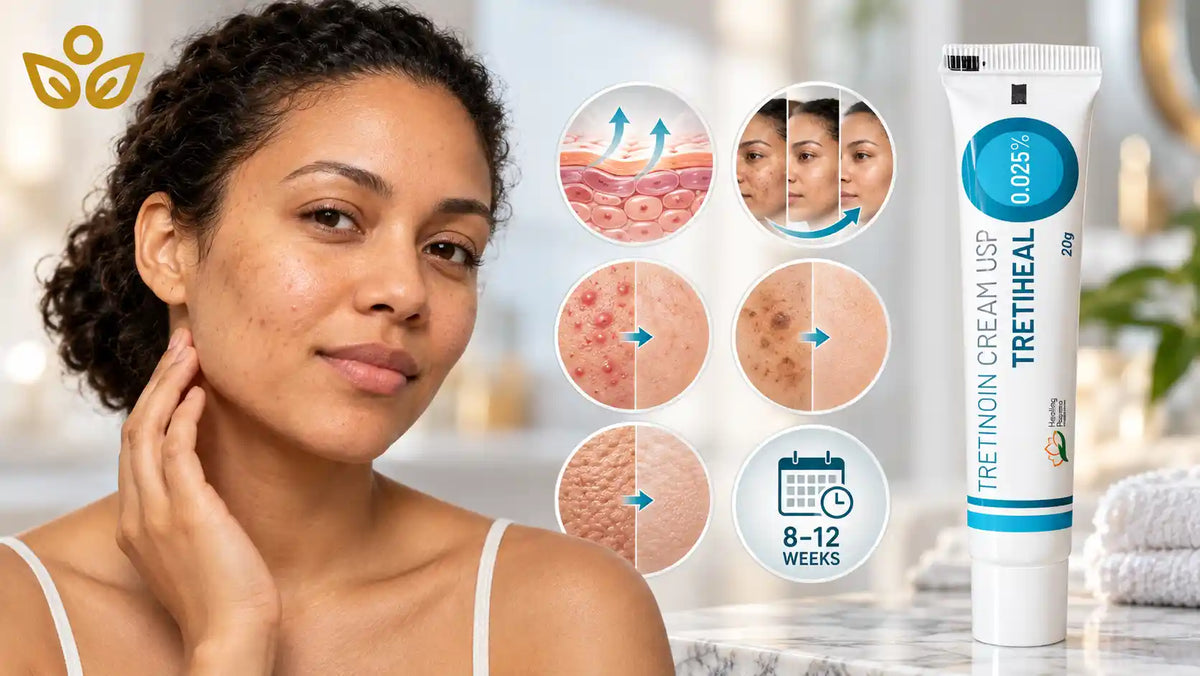
Tretinoin works by changing how skin cells grow and shed. That change follows the skin's own renewal cycle of about four weeks. Visible results need two to three full cycles. That is why most people see clear change at 8 to 12 weeks.
Tretinoin creams are all trans retinoic acid, the form of vitamin A the skin uses directly. It binds to retinoic acid receptors inside skin cells. This shifts how cells divide, mature, and detach from the surface. Retinol and retinal must convert into retinoic acid first. Tretinoin skips that step, which is why it works at lower strengths.
Acne begins as a microcomedone, a tiny blockage under the surface. It can take around eight weeks to become a visible spot. Tretinoin stops new microcomedones forming. Spots that were already developing can still surface in the first weeks.
Pigment follows a similar delay. Excess melanin sits in lower skin layers. Tretinoin speeds up the movement of those cells to the surface, where they shed. Each cycle removes a little more pigment. This is why dark marks fade gradually rather than in one step.
How the Tretinoin Timeline Compares With Retinol and Adapalene
Tretinoin usually shows change sooner than retinol. Retinol often needs three to six months for similar acne or texture changes. Adapalene sits closer to tretinoin, at around 12 weeks for acne.
Retinol converts into retinoic acid in two steps inside the skin. Only a small share completes that conversion. This makes retinol gentler but slower. Adapalene is a synthetic retinoid that targets specific receptors. It is often better tolerated, with a similar acne timeline. For a different retinoid option, discuss Tazret Forte tazarotene 0.1% with your prescriber before switching.
How Strength, Base and Frequency Change the Tretinoin Timeline
Higher strengths can show change slightly sooner, but they also raise irritation. The base mostly changes comfort and spread, not speed. Frequency matters most, because steady use is what moves the timeline forward.
|
Factor |
Effect on speed |
Effect on irritation |
What it means in practice |
|
Gradual |
Lowest |
Common starting strength for first time users |
|
|
Moderately faster |
Moderate |
Often used after skin has adjusted to 0.025% |
|
|
Fastest in theory |
Highest |
Usually reserved for skin that tolerates retinoids well |
|
|
Cream base |
Similar to gel |
Often gentler |
Suits dry, normal, or sensitive skin |
|
Gel base |
Similar to cream |
Can feel drier |
Suits oily skin in hot, humid weather |
|
Two to three nights a week |
Slower start |
Lower |
Fewer breaks during retinization |
|
Nightly use |
Steady once tolerated |
Higher early on |
Best reached gradually over several weeks |
Tretinoin 0.025%, 0.05% and 0.1%: A Higher Strength Is Not Always Sooner
A higher tretinoin strength does not always lead to faster visible results. Irritation from a strong start often forces breaks. Those breaks cancel out much of the speed advantage.
A well known 1995 photoaging trial compared a low and a high tretinoin cream strength over 48 weeks. Both strengths improved fine lines to a similar degree. The higher strength caused noticeably more redness and peeling. Acne data shows a similar pattern. Lower strengths reach comparable results with more time and fewer setbacks.
Many users move up only after three months of comfortable use. Moving up too early can restart dryness and peeling. Our analysis shows that the most consistent users rarely change strength in the first twelve weeks. Our Tretiheal 0.05% strength guide explains how the cream base affects tolerance.
Cream Base Versus Gel Texture
The cream base and the gel texture deliver tretinoin on a similar timeline. The cream is richer and contains oils that cushion the skin. The gel uses an alcohol based texture that dries quickly.
On dry or sensitive skin, a cream base often means fewer missed nights. On oily skin in KwaZulu Natal humidity, a gel can feel more comfortable. Comfort decides consistency, and consistency decides the timeline. Neither format changes how long the skin's renewal cycle takes.
Nightly Use Versus Alternate Nights
Nightly use gives the steadiest results once the skin has adjusted. Starting on two or three nights a week is usually safer. Many users reach nightly use between weeks 6 and 10.
Alternate nights can still give good results. They simply take a little longer. For sensitive skin, a slower routine without breaks often outpaces nightly use with frequent pauses.
Expected Tretinoin Results for Acne, Marks, Melasma and Texture

Comedonal acne improves first, often by weeks 8 to 12. Inflammatory acne and post inflammatory hyperpigmentation need three to six months. Melasma and photoaging are the slowest, often needing six to twelve months.
Comedonal and Inflammatory Acne
Blackheads, whiteheads, and closed comedones usually respond first. Many users see smaller bumps from week 6. Clearer skin often follows by week 12.
Red, inflamed papules and pustules take longer. Tretinoin prevents blockages but does not target acne bacteria directly. For that reason, it is often paired with benzoyl peroxide or azelaic acid. These pairings need careful timing, covered further below. Review Acnetop Gel 20g and its ingredients with your prescriber when discussing treatment for inflamed acne.
Post Inflammatory Hyperpigmentation on Deeper Skin Tones
Post inflammatory hyperpigmentation, or PIH, usually lightens within three to six months. On Fitzpatrick types IV to VI, it can take longer. Irritation from tretinoin itself can also create new marks.
Deeper skin tones produce more melanin in response to inflammation. So a strong start with heavy peeling can backfire. A lower strength and slow build often protects progress on these skin tones. Daily sunscreen keeps fresh pigment from replacing what tretinoin removes.
Melasma and the Role of Hydroquinone or Azelaic Acid
Tretinoin alone works slowly on melasma, often over six months or more. It is commonly combined with hydroquinone or azelaic acid. These combinations can show change within 8 to 12 weeks.
Hydroquinone reduces melanin production, while tretinoin helps shed existing pigment. Triple combination creams add a mild corticosteroid such as fluocinolone or mometasone. Studies on these creams usually run for 8 weeks. Longer use should be reviewed by a qualified professional because of steroid related skin thinning. Hydroquinone is also typically used in limited cycles. See our tretinoin and hydroquinone night routine for more detail on this pairing.
Melasma often returns with heat and sun exposure. So results depend on ingredients and on steady UV and visible light protection.
Photoaging, Fine Lines and Texture
Photoaging responds most slowly. Smoother texture may show at three months. Fine line changes usually need six to twelve months.
Tretinoin supports new collagen in the deeper skin layer. Collagen builds gradually, so changes are subtle from month to month. Photos taken every three months show progress better than the mirror.
The Tolerance Phase: Retinoid Dermatitis, Purging and Barrier Strain
The tolerance phase covers the first four to eight weeks. Redness, flaking, and stinging are common and usually temporary. A short flare of breakouts, called purging, may also appear.
This phase is sometimes called retinization. More severe irritation is known as retinoid dermatitis. Both relate to the skin barrier adjusting to faster cell turnover. Water loss rises for a while, so skin feels dry and tight.
Normal adjustment and signs to pause can look different:
-
Normal: fine flaking around the nose, mouth, and chin.
-
Normal: mild pinkness that fades within hours.
-
Normal: brief tingling after application.
-
Normal: small breakouts in usual areas, easing by weeks 6 to 8.
-
Pause: raw, shiny, or weeping patches.
-
Pause: burning that lasts for hours after application.
-
Pause: swelling around the eyes or lips.
-
Pause: new dark patches forming where irritation was strongest.
Barrier support shortens this phase. A ceramide moisturizer, a gentle cleanser, and fewer products help most. Applying moisturizer before tretinoin, often called buffering, can reduce stinging. It may slow the early pace slightly, but it supports steadier use.
Some users with very sensitive skin try short contact application. Tretinoin is left on for 30 to 60 minutes, then washed off. Contact time is extended gradually over several weeks. This approach trades early speed for fewer breaks.
Combining Tretinoin With Other Skincare Ingredients Without Slowing Progress

Combinations can help results, but poor timing can raise irritation and cause breaks. Use strong skincare ingredients at different times of day. Add one new ingredient at a time, never several together.
Benzoyl peroxide can break down many tretinoin formulas when applied at the same time. Many users apply benzoyl peroxide in the morning and tretinoin at night. Azelaic acid also fits well in the morning routine. It can help with redness and PIH alongside tretinoin. Compare tretinoin and azelaic acid for acne marks when weighing options for breakouts and pigmentation.
Glycolic acid, lactic acid, and salicylic acid exfoliate the surface too. Layering them with tretinoin often causes peeling and stinging. Most users pause them during the first two to three months.
Niacinamide is usually well tolerated with tretinoin. It may support the skin barrier during adjustment. Vitamin C serums are often kept in the mornings to reduce irritation risk.
Why Some Users See Slower Tretinoin Results Than Expected
Slower than expected results usually trace back to use, storage, or the type of skin concern. Hormonal breakouts, product breakdown, and inconsistent nights are common causes. Each one is worth ruling out before changing strength.
Tretinoin breaks down with light and heat. A tube left in a hot car or a sunny bathroom may lose strength. Store it closed, in a cool and dark place. Check the expiry date, and replace tubes that have changed colour or smell.
Application details matter too. Damp skin can increase irritation, which leads to missed nights. Too little product can leave areas untreated. A pea sized amount spread across the full face is the usual guide.
Some concerns respond poorly to tretinoin alone. Deep, painful nodules along the jawline often have a hormonal pattern. Cystic acne may need a different approach altogether. Persistent redness and flushing can point to rosacea, which tretinoin can worsen. A qualified skincare professional can help identify these patterns.
South African UV and the Pigment Timeline
High South African UV can slow pigment fading by months. Tretinoin thins the outer layer of dead cells, which increases sun sensitivity. Daily SPF 50 is essential for any pigment goal.
UV index readings above 10 are common in summer across much of the country. Highveld altitude increases UV exposure. Coastal sand and water reflect extra light onto the face. Heat and visible light can also darken melasma, even without burning.
Tinted mineral sunscreens with iron oxides add protection against visible light. This matters most for melasma and deeper skin tones. Reapply every two hours outdoors, and after sweating. A wide brim hat adds protection that sunscreen alone cannot match. Explore our summer skincare bundles to compare treatment and SPF 50 pairings.
Reading Your Progress at Weeks 4, 8, 12 and 24
Set checkpoints instead of judging daily. Week 4 checks tolerance, week 8 checks early acne change, and week 12 checks clear results. Week 24 is the fair point to judge pigment and texture.
At week 4, check how well your skin tolerates the current frequency. At week 8, look for fewer new comedones. By week 12, breakouts should look clearly better. At week 24, compare photos for PIH, melasma, and texture.
If acne shows no change at week 12, review frequency, strength, and other products. If irritation persists past week 8, reduce frequency and support the barrier. Get advice if neither change helps.
Keep a simple log alongside photos. Record strength, nights per week, and any new product added. This makes it easier to link a setback to its cause.
Tretinoin should be avoided during pregnancy, while trying to conceive, and while breastfeeding. People with eczema or rosacea should seek advice first.
Ingredient Focused Questions About the Tretinoin Timeline
Does moving from 0.025% to 0.05% speed up results?
It can, once the skin fully tolerates 0.025%. Moving up too soon often restarts irritation. Most users wait at least 12 weeks.
Does buffering with moisturizer stop tretinoin working?
No. Buffering may slow early changes slightly. It usually allows more consistent use, which helps overall progress.
How long should I use tretinoin with hydroquinone for melasma?
Combination routines are usually reviewed after 8 to 12 weeks. Hydroquinone is often used in cycles. A qualified professional should guide longer use.
Can tretinoin cause new dark marks?
Yes, if irritation is strong. Deeper skin tones are more prone to this. A slower start and daily sunscreen reduce the risk.
Is tretinoin slower than adapalene?
Tretinoin often works at a similar or slightly faster pace. Adapalene is usually gentler. Both need about 12 weeks for clear acne results.
When does tretinoin help enlarged pores look smaller?
Pores often look smaller from around week 12. Clearing blockages reduces the stretched look. Pore size itself is largely genetic.
Can heat damage my tretinoin cream?
Yes. High heat and direct light can break tretinoin down. Keep the tube capped and away from windows and car dashboards.
Do tretinoin results stop after a year?
No. Benefits for texture and fine lines can keep building. Many users shift to a lower frequency for maintenance.
Conclusion
The tretinoin timeline is set by skin goal first, then by strength, base, and frequency. Comedonal acne often responds by week 12. PIH, melasma, and photoaging usually need six months or more. A slower, steady start tends to beat an aggressive one that forces breaks. Read more ingredient focused guides on tretinoins.co.za to plan each stage with care.