Cart
0
Pigmentation is one of the most stubborn skin concerns in South Africa, and two actives come up again and again for it: tretinoin and hydroquinone. On their own, each has a clear job. Used together in a careful night routine, they work on dark marks from two directions at once.
Based on our findings, the people who see real change are not the ones using the most products. They are the ones who get the order, the timing, and the sun protection right, and who treat this as a short focused course rather than a forever habit.
How Tretinoin and Hydroquinone Work Together

The pairing works because the two ingredients solve different parts of the same problem. Hydroquinone slows down tyrosinase, the enzyme your skin uses to make melanin. Less melanin production means dark patches fade more slowly than they form.
Tretinoin, a prescription retinoid, speeds up how fast your skin renews itself. Old pigmented cells move up and shed sooner, and the faster turnover also helps hydroquinone reach where it needs to work. This is why the combination is used for melasma, post inflammatory hyperpigmentation, and stubborn dark spots that do not shift with basic care.
It is also why it needs respect. Both are active medicines, not cosmetics, and they are best used with guidance from a doctor or pharmacist who knows your skin. Readers managing breakouts and early lines may compare treatments for acne and wrinkles before choosing a routine.
How to Layer Both These Creams at Night

This routine belongs at night. Tretinoin breaks down in sunlight, so daytime use wastes it. Work on dry skin, because applying actives to damp skin drives them harder and raises irritation.
A simple, reliable order looks like this:
-
Cleanse with a gentle wash and pat dry. Wait about 15 to 20 minutes so the skin is fully dry.
-
Apply a thin layer of hydroquinone 4% cream to the dark areas only, not the whole face.
-
Give it a few minutes to absorb, then apply a pea sized amount of topical tretinoin across the treatment zone.
-
Finish with a plain moisturiser to keep the barrier comfortable.
A pea sized amount really is enough for the full face. More does not fade marks faster. It only raises the risk of redness and peeling. If you are still comparing product formats, you can browse all treatments before choosing what belongs in the routine.
Start Tretinoin and Hydroquinone Slowly
Your skin needs time to adjust to two actives. Starting both every night is the fastest way to trigger stinging, flaking, and a barrier that feels raw. Our analysis shows a slow build gives better results with far less downtime. Beginners who are unsure where to start can compare tretinoin 0.025 vs 0.05 before setting their first schedule.
Begin with the combination twice a week for the first two weeks. If your skin stays calm, move to every second night. After a few more weeks, many people reach nightly use, though some skin does best staying at alternate nights for good. If a night feels too much, apply moisturiser first and the actives on top.
This buffering softens the effect without cancelling it. The Tretinoin Strength Guide explains how percentage, concern, and tolerance affect the choice. Expect a settling in period. Some breakouts or light peeling in the first four to six weeks are common as the skin turns over faster.
This usually calms down. Raw, burning, weeping skin is not part of the process and means you are pushing too hard. Before moving higher, a tretinoin 0.05% vs 0.1% comparison explains why tolerance matters more than choosing the strongest option.
The sunscreen rule under the South African sun

Sun protection is not an optional extra here. It is the step that decides whether the routine works at all. Our strong, high UV climate feeds pigmentation, and melasma in particular darkens fast with sun exposure. Skip protection and the marks you are fading will keep coming back.
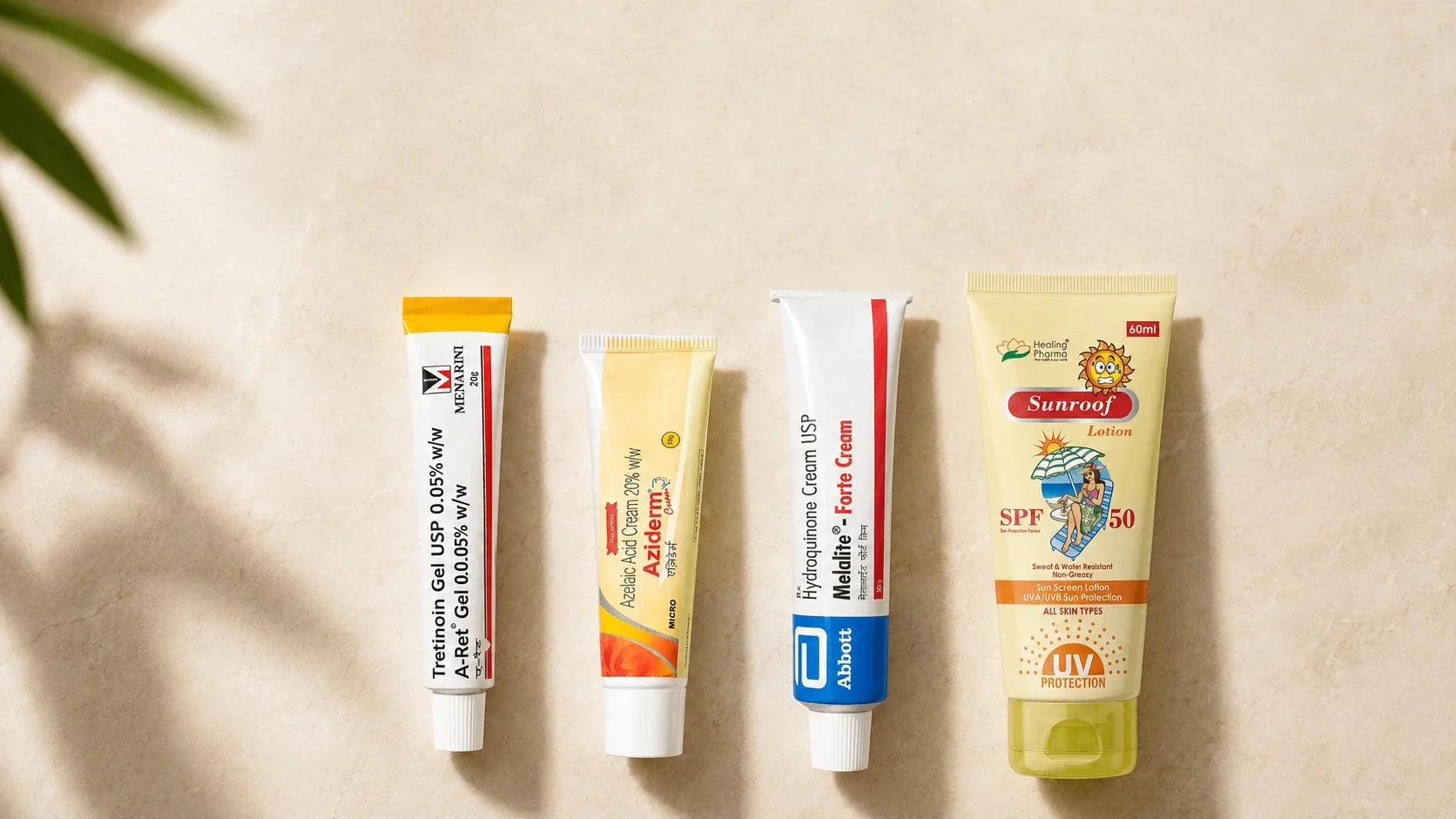
Use a broad spectrum SPF 50 every morning, even on cloudy days and through winter. Reapply if you are outdoors for long stretches. A wide brim hat helps on beach days and long drives. Getting this right matters as much as the actives, which is why a solid daily sunscreen habit is worth building first. A daily option such as Sunroof SPF 50 sunscreen can support this step when the formula suits your skin.
Cycle hydroquinone, do not use it forever
Hydroquinone is meant for short courses, not permanent use. A typical cycle runs about 8 to 12 weeks, followed by a break of a similar length. During the break you keep up sunscreen and gentle care, and often a milder brightening ingredient, then reassess.
A separate guide to tretinoin and azelaic acid for acne marks explains how that pairing differs from a hydroquinone course. There are two reasons for this. First, the skin can plateau, so a rest keeps it responsive. Second, using strong hydroquinone continuously for long periods carries a small risk of a rare darkening reaction called ochronosis.
Short, spot focused cycles with sun protection keep the ingredient working the way it should. A doctor or pharmacist can help you plan the timing. The hydroquinone dark spot treatment guide covers course timing, monitoring, and the role of sun protection in more detail.
When Triple Combination Cream Is Used for Melasma
For resistant melasma, some people are prescribed a triple combination cream that holds hydroquinone, tretinoin, and a mild steroid in one tube. The steroid calms irritation so the other two are better tolerated, which can make stubborn patches respond faster. A product such as Triluma Cream 15g fits this category, but it should only be used under professional direction.
Because it contains a steroid, this option is strictly short term and needs supervision. Long unbroken use of a facial steroid brings its own problems, such as thinning skin and rebound redness. Treat it as a focused tool for a defined period, not a daily forever cream.
When Tretinoin and Hydroquinone Results May Appear

Fading is gradual, and knowing the pace keeps expectations sensible. In the first two to four weeks the skin is mostly adjusting, and you may see light flaking rather than any fading. Around weeks four to eight, many people notice the first signs of lighter marks, especially surface level post inflammatory pigmentation.
Deeper melasma is slower and often needs two to three months of steady, sun protected use before the change is clear. A guide on how to fade dark spots on darker skin explains why surface and deeper pigment change at different speeds.
Progress rarely runs in a straight line. A patch can lighten, then look slightly darker after a sunny weekend, then settle again. This is exactly why the daily sunscreen and the short hydroquinone cycles carry so much weight. Judge results across a full cycle, not night to night.
When to Pause or Ask for Help

● Pause the routine if redness spreads across the skin.
● Stop if burning does not settle after application.
● Let the skin recover if it feels tight, sore, or raw.
● Treat these signs as barrier stress, not progress.
● Use a gentle cleanser, plain moisturiser, and sunscreen for one to two weeks.
● Restart slowly only when the skin feels calm again.
● Avoid tretinoin and hydroquinone during pregnancy or breastfeeding.
● Speak to a professional if this applies to you.
● Ask a skin professional if marks do not improve after a full sun protected cycle.
● Get your plan checked if the diagnosis or routine no longer seems right.
Using Tretinoin and Hydroquinone Safely
-
Use tretinoin and hydroquinone at night only.
-
Start slowly so your skin can adjust.
-
Keep hydroquinone for short treatment cycles.
-
Apply SPF every morning without skipping.
-
Use triple combination cream only under professional guidance.
-
Treat triple combination cream as a short course, not daily long term care.
-
Pause the routine if your skin feels sore, raw, tight, or irritated.
-
Treat this as a focused pigmentation routine, not a forever habit.
-
For stubborn marks, read the pigmentation care guides on tretinoins.co.za and check the matching skin brightening range.
Tretinoin and Hydroquinone Routine FAQs
Which should I apply first, hydroquinone or tretinoin?
Hydroquinone first on the dark areas, then tretinoin once it has been absorbed, is a common and sensible order. Some prescribers reverse it. Follow the plan your professional set for you and stay consistent.
How long should one hydroquinone cycle last?
Around 8 to 12 weeks, then a break of a similar length. Continuous long term use is not advised, and sunscreen must run through both the active phase and the rest phase.
Is the triple combination cream stronger than using them separately?
It can work faster on resistant melasma because the steroid reduces irritation. It is also stricter about time limits, since the steroid is not for long use. It suits supervised, short courses.
Can I use this routine for melasma or only dark spots?
Both. It is often chosen for melasma and post inflammatory marks. Melasma is more sun sensitive, so daily protection matters even more with it.
Can I keep using vitamin C or exfoliating acids at the same time?
Vitamin C in the morning pairs well. Strong exfoliating acids on the same nights usually push the skin too far. Space them out or drop them while you run the combination.
What does too much irritation look like?
Light dryness or flaking is normal early on. Persistent burning, raw patches, or spreading redness are not. Cut back frequency and focus on repair if you see them.
Is it safe while pregnant or breastfeeding?
No. Pause both actives and ask a professional about gentler options for that period.
Conclusion
Tretinoin and hydroquinone can support stubborn pigmentation when you use them with care. The best routine starts at night, builds slowly, and gives the skin time to adjust. Use hydroquinone in short cycles, keep tretinoin to a small amount, and protect your skin with SPF every morning. If your skin burns, peels badly, or feels sore, pause and let it recover.
For South African skin, steady sun protection matters as much as the night treatment. If melasma, dark marks, or irritation do not improve, speak to a qualified skin professional before changing the routine.