Cart
0
If you already use actives, you have probably noticed that the same tretinoin can feel very different depending on its base. For oily and acne-prone skin, the gel usually wins, and it comes down to the vehicle carrying the active, not the strength on the box.
This guide takes a formulation-led view. It looks at what the gel base actually does, separates real oil control from marketing, and shows how to run the gel on oily skin without over-drying it. It stays educational and non-diagnostic, so use it to plan smarter, not to skip professional advice when your skin needs it.
Why formulation matters more than strength for oily skin

The percentage tells you how much active is present. The vehicle decides how it feels and how your skin takes it. A gel uses a light alcohol and water base with few oils, so it dries fast and feels matte. On oily skin, that base is more comfortable and easier to stay consistent with, which is what really drives results.
Two products at the same strength can behave differently on oily skin because of the base alone. Many people assume they need a higher percentage when they actually just need a lighter formulation. Getting the vehicle right first often solves the comfort problem without touching the strength.
If the vehicle is still unclear, browse all treatment options before deciding. Comparing gels, creams, and supporting products together can make the final choice easier. This keeps the vehicle choice clear before you think about moving up in strength.
Inside the gel: what the vehicle actually does
A gel base carries the active in a thin, quick drying film. The alcohol content helps it set fast and leaves no greasy residue, which oily skin reads as clean. It also tends to feel less pore-clogging than a rich cream. The trade off is that this same base can feel more drying at the start.
Alcohol base, quick dry, matte feel
The alcohol and water mix evaporates quickly, so the gel dries within a minute or two. That is why it leaves a matte finish instead of a sheen. For oily skin that hates a heavy layer, this fast set is the main comfort win.
Why it penetrates fast
With fewer oils in the way, the gel spreads thin and absorbs quickly. Some find this makes it feel more active early on, which is another reason to start slowly. Fast absorption is helpful, but it can also mean quicker dryness if you overapply. A-Ret Tretinoin Gel 0.05% uses this lightweight format, but the medium strength still calls for a gradual start.
The honest bit: feel versus oil control
Here is where many articles overpromise. The gel feels mattifying, but tretinoin is not a reliable way to reduce sebum. The oil-free feel comes mostly from the base, not from the active shutting down oil glands. That role belongs to isotretinoin, an oral medicine, which is a different compound entirely.
So the realistic benefit for oily skin is comfort plus clearer, smoother looking skin through faster cell turnover, not a guaranteed drop in oiliness. Some users feel less congested and read that as less oily.
Others see no change in shine. Both are normal. Naming this early stops people from chasing an effect the gel may not deliver. Readers balancing breakouts with early lines can also compare treatments for acne and wrinkles that suit oily skin.
Matching gel to oily skin without over-drying it

Oily skin is not automatically tough skin. The alcohol base can strip and irritate if you rush, and irritation can trigger more marks on deeper skin tones. The aim is steady use your skin tolerates, with the barrier kept calm.
Low and slow beats fast and flaky. A high-strength option such as A-Ret Tretinoin Gel 0.1% is better considered after tolerance is established and professional guidance supports the step.
The slow-start method for oily skin
● Begin with a lower strength while the skin adjusts.
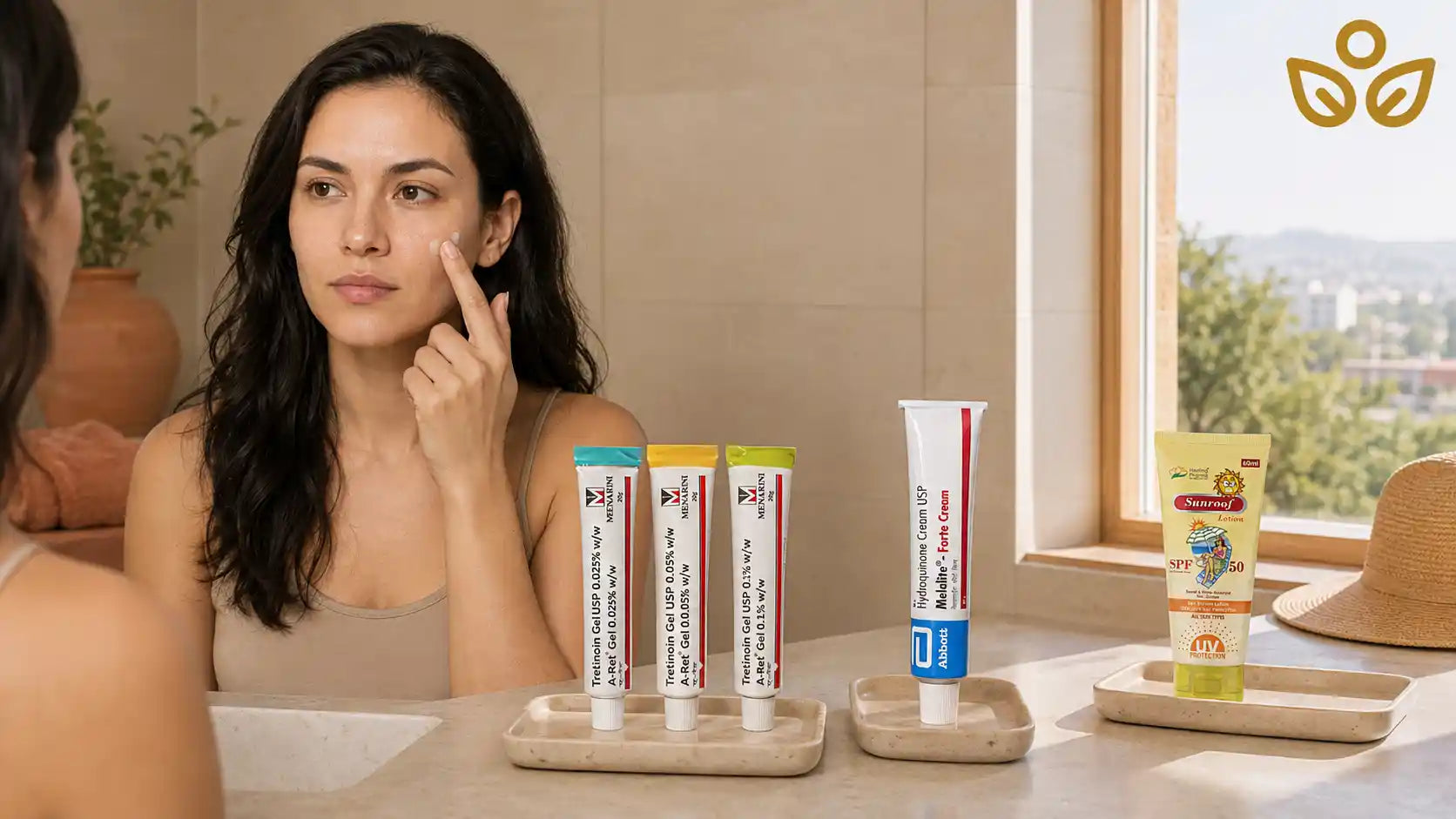
● For a lower-strength gel option, beginners may consider A-Ret Tretinoin Gel 0.025% while building tolerance.
● Apply a pea sized amount to clean, fully dry skin at night.
● Start two or three nights a week, then build up gradually.
● Buffer with a light moisturizer if dryness sets in.
Purging versus irritation on oily skin
Early flaking and a short spell of extra breakouts can be part of adjusting. Burning, raw patches, stinging that lingers or spreading redness point to irritation, and that is your cue to ease off. On oily skin the purge can feel confusing because you expect less oil, not more spots, but it usually settles.
Barrier care even when you shine
Oily skin still has a barrier that the gel can dry out. A light, non-comedogenic moisturizer with humectants and ceramides supports tolerance and cuts flaking. Skipping moisture to feel less oily often backfires and leads to more irritation and redness.
Running gel with other actives

Keep the routine focused. The gel does the heavy lifting at night, so most other actives should sit at a different time or be introduced with care. The table below shows the usual roles so you avoid stacking too much on one night.
|
Step |
Role |
How it is commonly used |
Caution |
|
Renewal, texture, acne look |
Night, pea size, built up slowly |
Avoid in pregnancy, expect adjustment |
|
|
Light moisturizer |
Barrier support |
Same night, after or as a buffer |
Keep it non-comedogenic |
|
Hydroquinone |
Post-acne marks |
Short guided courses with breaks |
Not for continuous long term use |
|
Daily protection |
Every morning, reapplied |
Non-negotiable with retinoids |
How tretinoin and hydroquinone are commonly used for marks

Oily, acne-prone skin often leaves stubborn dark marks. Tretinoin supports the fading of marks over time through turnover, while hydroquinone works on the marks directly by calming excess pigment.
They are sometimes paired under guidance, often on alternating days and for a limited period, because both can dry or irritate if overused. Before adding pigment care, the acne marks vs dark spots guide helps separate post-acne marks from melasma and sun-related patches.
What to keep off the same night
Avoid layering strong exfoliating acids like salicylic or glycolic on the same night as the gel. Using them at separate times, such as an acid in the morning and the gel at night, lowers the irritation risk. Piling actives together is a common reason oily skin ends up raw.
The South African sun and sweat factor
Sun protection is the deciding step in any tretinoin routine here. South Africa sees high ultraviolet levels for much of the year, and the gel leaves skin more sensitive to light. A light, broad spectrum sunscreen every morning, reapplied when you sweat or sit in the sun, protects your progress. Skip it and the marks linger.
Heat and sweat also matter for oily skin. A light SPF made for oily skin feels better through a hot day and is more likely to stay on. Shade, a hat and reapplication all help. For anyone using tretinoin gel and hydroquinone, sun care is what makes the effort worthwhile.
The melasma vs hyperpigmentation vs sun spots guide explains why different marks respond differently to light and treatment.
Mistakes that stall oily-skin progress
● Reaching for a higher strength when the base was the real issue.
● Applying the gel to damp skin, which increases stinging.
● Skipping moisturizer to feel less oily.
● Stacking acids and the gel on the same night.
● Dropping sunscreen once the skin looks calmer.
Frequently asked questions of Tretinoin Gel for Oily Skin
Is gel or cream better for oily, acne-prone skin?
Gel usually suits oily skin better because its light base dries matte and feels less greasy. Cream like Tretinoin tends to suit dry or sensitive skin. Tolerance and comfort guide the choice.
Does tretinoin actually lower sebum or just feel matte?
Mostly it feels matte because of the gel base. Tretinoin is not a proven sebum reducer, unlike isotretinoin, so treat the lighter feel as the realistic benefit. If a stronger gel feels tempting because shine remains, the guide to tretinoin strength for acne, dark spots, and wrinkles explains why tolerance matters more than chasing a higher percentage.
Is the gel too drying if I already have oily skin?
It can be at first, since the alcohol base is more drying. A slow start and a light moisturizer usually make it manageable.
How do I tell purging from irritation on oily skin?
Purging is short-term flaking and small breakouts as skin adjusts. Burning, raw skin or spreading redness is irritation, which means you should ease off and let the barrier recover.
Can you use tretinoin gel with hydroquinone for post-acne marks?
They are sometimes used together under guidance, often on alternating days for a limited period. Both are strong, so careful dosing and daily sun protection matter.
Should oily skin start at 0.025 or a higher strength?
A lower strength is a sensible starting point so the skin can adjust, then build up slowly. Higher is not automatically better and often just adds irritation. The tretinoin 0.025 vs 0.05 comparison shows when starting lower makes sense and when a step up may be reasonable.
How long before oily skin sees a difference?
Skin usually adjusts over the first few weeks, with clearer results often taking a couple of months. Consistency and sun protection help.
Conclusion of Tretinoin Gel for Oily Skin
For oily and acne-prone skin, the gel wins on formulation: a light base that dries matte, absorbs fast and feels clean. The catch is that the matte feel is not the same as lower oil, so aim for comfort and clearer looking skin rather than an oil switch-off. Start low, guard the barrier, pair it with daily SPF, and add hydroquinone for marks only with guidance.
For more informational guides and creams, gels visit tretinoins.co.za.