Cart
0

If you already know the difference between a flat mark and a live spot, the useful question is not which is which. It is how to run treatments for both without one undermining the other, which is where most routines quietly fail.
Marks and active acne pull in opposite directions. Marks want turnover and pigment control. Active acne wants oil and bacterial control, and it punishes irritation. This article covers the sequencing, the overlap actives, and the loop that keeps people stuck for years.
Why Active Acne Can Keep Creating New Marks

Active acne produces marks continuously. Every inflamed lesion leaves pigment behind, so while breakouts continue, your mark count stays roughly flat no matter how good the pigment product is. Meanwhile, many pigment actives are irritating, and irritation on acne prone skin drives more inflammation, which produces more marks.
That is the whole conflict in two sentences. It is not a product quality problem. It is a rate problem and an irritation problem stacked on top of each other. Most people respond by adding more. A stronger acid, a second brightening serum, a longer routine. That accelerates the loop rather than breaking it.
How Irritation Can Cause More Acne Marks
The sequence is predictable. You add a pigment active, skin becomes irritated, irritation triggers more inflammation, inflammation produces new marks, and you conclude the product is not strong enough. So you add another one. Six months later the marks are the same and the barrier is damaged. This happens far more often than genuine treatment resistance.
Signs you are in the loop:
● Skin stings when you apply water or a plain moisturizer.
● Diffuse redness across whole areas rather than around individual spots.
● Marks appearing in places you did not have a spot.
● Flaking that never fully resolves between applications.
● New breakouts starting shortly after each routine escalation.
Breaking it means reducing, not adding. Strip back to a gentle cleanser, a plain moisturizer, and SPF 50 for two weeks. Skin that is not inflamed makes fewer marks, which is a treatment step in itself even though it feels like doing nothing.
Tretinoin and Azelaic Acid for Acne and Marks

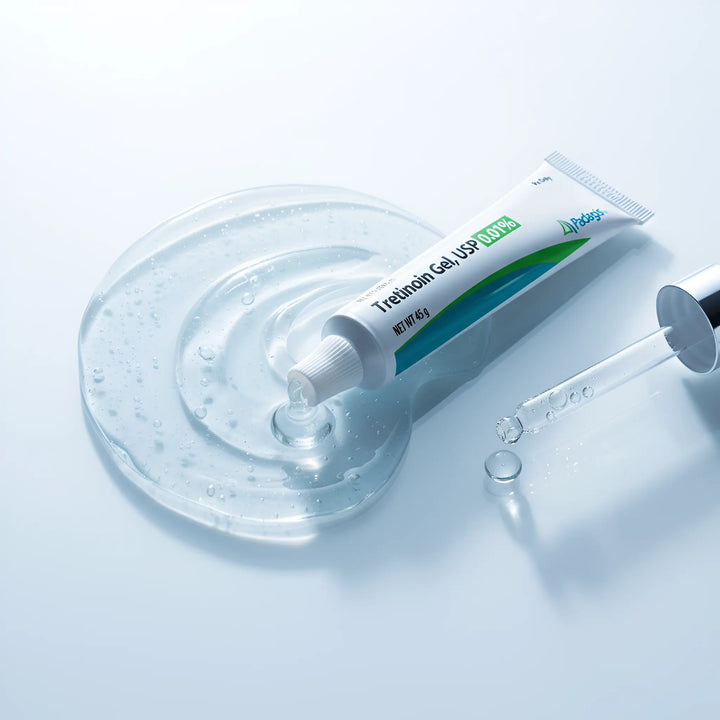
A few ingredients earn their place because they treat active lesions and pigment at the same time. These are what you build around when both problems are present, rather than running two separate routines. Tretinoin is the clearest example. It normalizes how pores shed, which addresses active acne, and it accelerates turnover, which helps pigment clear. That dual action is why it appears in both acne and pigmentation routines.
Azelaic acid is the other. It has antibacterial and anti-inflammatory activity for active lesions, plus a direct effect on pigment production. It also tends to be tolerated better than most alternatives, which matters when irritation is the enemy. Niacinamide is milder but useful. It supports the barrier while nudging pigment, so it rarely causes problems in either phase.
Benzoyl peroxide, salicylic acid, and hydroquinone are all single purpose. Useful, but they belong to one phase or the other.
How to Sequence Acne and Dark Mark Treatment?
|
Terms |
Phase one, acne active |
Phase two, breakouts settling |
|
Main goal |
Reduce inflammatory lesions |
Clear existing pigment |
|
Core actives |
Tretinoin or benzoyl peroxide, azelaic acid |
Continue phase one actives, add one pigment focused product |
|
Hold back |
Hydroquinone, strong acids, multiple brighteners |
Nothing new until the first addition has had 8 weeks |
|
SPF |
SPF 50 daily, non negotiable |
SPF 50 daily, non negotiable |
|
Barrier support |
Plain moisturizer every night |
Continue |
|
Realistic duration |
8 to 16 weeks |
3 to 6 months |
|
Move on when |
New lesions are occasional rather than weekly |
Marks visibly lighter on monthly photos |
The move from phase one to phase two is not a clean switch. You keep the acne actives running. Dropping them once skin clears returns you to phase one within weeks, and the marks return with the lesions.
Building a Routine to Control Active Acne

● Keep the routine short and consistent with no more than two actives at a time.
● Use a plain moisturizer and apply SPF 50 every day.
● Focus first on reducing inflammatory lesions without triggering extra pigmentation.
● Avoid adding dark mark treatments while active acne is still flaring.
● Start low strength tretinoin two or three nights weekly, then increase as tolerance improves.
● Use azelaic acid on alternate nights or in the morning.
● Consider benzoyl peroxide when acne is mainly inflammatory rather than comedonal.
● Expect mild flaking and some early congestion while the skin adjusts.
● Avoid pushing through strong irritation because it can trigger more dark marks.
What to Avoid While Active Acne Is Still Flaring
-
Hydroquinone: Avoid using it while inflammation is active. Treating pigment at this stage can work against progress and use up the treatment course too early.
-
Strong exfoliating acids: Avoid chemical exfoliation when a retinoid is already increasing skin turnover. Combining them can raise irritation and pigmentation risk.
-
Multiple brightening serums: Avoid stacking several brightening products together. One well-chosen option is usually enough, while extra layers increase irritation risk.
Adding Dark Mark Treatments After Breakouts Settle
Wait until new lesions are occasional rather than routine. Then add one pigment focused product, not three, and hold everything else steady for at least eight weeks so you can tell what it is doing.
When to Add Azelaic Acid for Acne Marks
If azelaic acid is not already in your routine, it is usually the sensible first pigment addition. It handles residual inflammatory activity while working on pigment, so it stays useful if breakouts flare again.
It also has a low irritation profile relative to what it does, which matters when you are trying not to restart the loop. Give it three months. Pigment work is slow, and azelaic acid is not a fast active.
When to Add Hydroquinone for Acne Marks
Hydroquinone belongs to phase two, on settled skin, and it works as a course rather than a permanent fixture. Starting it while acne is active wastes it. It also needs a plan for stopping. Continuous long term use is not the intended pattern, and coming off it without maintaining sun protection can allow pigment to return.
Discuss the course length and the exit plan with a pharmacist or doctor rather than deciding alone. Never run hydroquinone alongside a fresh retinoid introduction. The combined irritation is a common cause of the exact pigmentation you are trying to treat.
Why Treatment Order Matters for Deeper Skin Tones

Skin with more melanin produces a stronger pigment response to the same amount of inflammation. So the cost of getting the sequence wrong is higher, and the loop closes faster. Irritation that would leave temporary redness on lighter skin leaves a brown mark that lasts months.
This is why the "just push through the irritation" advice that circulates online is poor guidance here. Pushing through generates the exact problem you are treating. It also means the SPF 50 step carries more weight, not less. Pigment already in production responds strongly to UV and visible light, so daily protection is what prevents new marks from setting in while the old ones clear.
Slower and steadier genuinely produces faster results on deeply pigmenting skin. That is not a compromise position, it is the efficient one.
How to Tell if Your Acne and Marks Routine is Working
Assess phase one on lesion count, not on marks. If new inflammatory spots are dropping over eight to twelve weeks, the routine is working even though your face may look unchanged because the existing marks are still there.
Assess phase two on monthly photographs in identical light. Pigment change is invisible day to day and obvious across three months.
Our analysis of how people describe stalled progress usually finds one of three things. Either they are still in phase one and judging phase two results, or they escalated too fast and are sitting in the irritation loop, or sun protection is inconsistent.
If lesions are controlled, irritation is absent, SPF 50 is genuinely daily, and marks have not moved in four months, that is the point to discuss stronger or in clinic options with a professional. Detailed sequencing guidance for combining actives is covered further in the routine guides on tretinoins.co.za.
Acne Marks vs Active Acne FAQs
Can I use hydroquinone while I am still breaking out?
It is generally better to wait. Active inflammation keeps producing new pigment, so a hydroquinone course started too early achieves less than the same course started on settled skin.
Does tretinoin treat both acne and dark marks?
It works on both, which is why it suits people dealing with the two together. It normalizes pore shedding for active acne and accelerates turnover for pigment. Results on marks are slower than on lesions.
Can I use azelaic acid and tretinoin in the same routine?
Many people do, usually on alternate nights or with azelaic acid in the morning. Applying both at night together raises the chance of stinging and flaking.
Is my skincare routine causing my dark marks?
It can be. Irritation triggers pigment production, so an aggressive routine on acne prone skin creates marks in places you never had a spot. Diffuse redness and constant flaking are the warning signs.
How long should phase one last before I add a pigment product?
Usually eight to sixteen weeks, judged by lesion count rather than by the calendar. Add the pigment product once new spots are occasional rather than weekly.
Should I stop my acne actives once my skin clears?
No. Clearing is the routine working. Stopping typically returns breakouts within weeks, and new marks follow, which resets the whole sequence.
Why do marks appear where I never had a pimple?
That is usually irritation driven pigmentation rather than post acne marking. It points to too many actives, too much exfoliation, or a compromised barrier.
Does benzoyl peroxide help with marks?
No. It works on bacteria and active lesions. It belongs to phase one, and on deeper skin tones it needs careful use since irritation from it can worsen pigmentation.
Can I run an acne routine and a pigmentation routine at the same time?
Running two full routines together is the most common cause of the irritation loop. Use overlap actives such as tretinoin and azelaic acid instead, then add a single pigment product later.
Conclusion
The conflict between marks and active acne is a sequencing problem rather than a product problem. Control the lesions first with actives that also help pigment, keep the routine short enough that irritation never takes hold, and add a single pigment product once breakouts settle. On deeply pigmenting skin the order matters more, not less, and SPF 50 holds the whole thing together. Explore related guides on combining actives safely for further routine support.