Cart
0
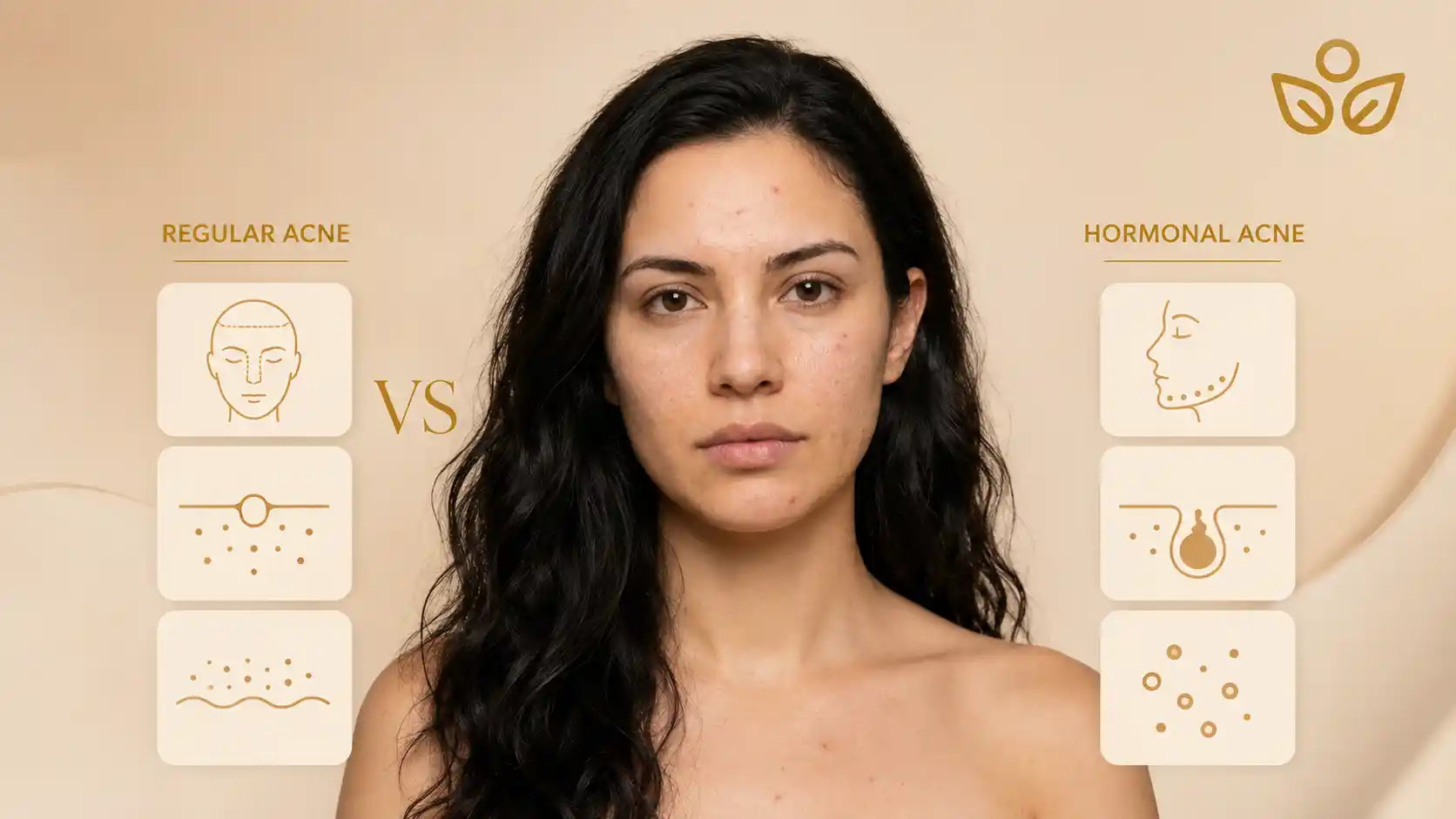
If you already use actives, you know that not all breakouts respond the same way. Two people can follow the same routine and get different results, because their acne has a different driver. Regular acne is mostly a skin surface problem. Hormonal acne comes from inside. That difference shapes what actually helps.
This guide takes a treatment-aware angle. Instead of only defining each type, it looks at how to read your breakouts, where topical actives fit, and where skincare stops being the whole answer. It stays educational and non-diagnostic, so use it to plan smarter, not to skip professional advice when your skin needs it.
Why naming the driver matters before you treat
The driver decides the plan. Regular acne responds well to actives that keep pores clear and calm inflammation on the skin. Hormonal acne is fed by internal hormone shifts, so it often resists topical care alone and may need a professional for the internal side. Treating a hormonal pattern as a simple surface problem is why many routines stall.
Most real cases sit on a spectrum. Someone can have surface congestion across the T-zone and deep, cyclical cysts on the jaw at the same time. Naming which part is dominant, and being honest about the hormonal part, saves months of trial and error with the wrong tools.
Reading your breakouts: pattern, place and timing

You can learn a lot before any product touches your face. Watch where spots sit, how deep they feel, and whether they follow a monthly pattern. Surface spots across oily zones lean regular. Deep, sore spots on the lower face that flare on a cycle lean hormonal. Both can be present.
Surface-driven signs
Regular, surface-driven acne shows as blackheads, whiteheads and smaller inflamed spots, mostly on the forehead, nose and cheeks. It tends to appear without a strict schedule and often improves fairly quickly with steady, pore-clearing care.
Hormone-driven signs
Hormone-driven acne sits lower on the face, around the jaw, chin and neck. The spots are often deeper, tender and slower to heal, and they tend to return in the same places at the same time each month. Stress and conditions like PCOS can make the pattern stronger.
Track the flare before changing the active
Before changing products, track the breakout pattern for one or two cycles. Note where the spots appear, when they start, how deep they feel, and whether they leave dark marks. This simple habit can show whether your routine is failing, or whether the acne is following a hormone-led rhythm.
The acne marks vs dark spots guide helps separate post breakout pigment from other uneven patches.
A useful tracking note can include your cycle date, stress level, sleep, sunscreen use, new products, picking, sweating and where the spots appeared. If jaw and chin spots return before every period, that tells you something different from random whiteheads across the forehead. The clearer the pattern, the easier it is to choose the next step without guessing.
Match the spot type before choosing the active
The type of spot matters as much as the place. Blackheads and whiteheads are clogged pores, so pore-clearing actives often make sense. Red inflamed spots need a calmer routine that does not strip the skin. Deep cysts and nodules need more caution, because they are painful, slower to heal and more likely to leave marks.
The salicylic acid vs benzoyl peroxide guide explains which option better matches clogged pores or inflamed spots.
This is where many routines go wrong. Someone with blackheads may need steady turnover and patience. Someone with deep jawline cysts may need skincare plus medical advice. If the spot type is different, the plan should be different too. Matching the active to the spot keeps the routine focused and reduces irritation.
For acne prone skin, the adapalene vs tretinoin comparison covers breakout control, tolerance, and irritation.
Where topical actives fit for each type

Topical actives support the skin for both types, but they are not identical in role. Turnover-based and pore-clearing actives help the surface side, and they still add value alongside a hormonal plan. The table below shows the usual roles so you can build a focused routine.
Readers can compare the all products collection before matching a formula to their main concern.
|
Active |
Best role |
How it is commonly used |
Caution |
|
Renewal, breakouts, marks |
Night, pea size, built up slowly |
Avoid in pregnancy, expect adjustment |
|
|
Calming spots and marks |
Once or twice daily |
Mild tingling early on |
|
|
Niacinamide |
Oil balance, marks support |
Morning or night |
Well tolerated |
|
Hydroquinone |
Post-acne dark marks |
Short guided courses with breaks |
Not for continuous long term use |
How tretinoin works on breakouts and marks
Tretinoin speeds up skin cell turnover and has a calming effect on inflamed skin, which may help clear breakouts and fade the look of marks over time. It works gradually, and the first few weeks can bring dryness or flaking as the skin adjusts. That slow start is normal and worth planning for.
Skin that already tolerates lower strengths may consider Tretiheal Tretinoin Cream 0.05% with professional guidance.
How hydroquinone is commonly used for dark marks
Deep, hormonal spots often leave stubborn dark marks. Hydroquinone works on the marks directly by calming excess pigment, and it is usually applied to the marks for a limited period with breaks rather than continuously. It pairs with sun protection, since light undoes its work.
Supporting actives
Azelaic acid and niacinamide are gentle, tolerable options that suit reactive or deeper skin. They help calm inflammation and support a more even look, which matters when breakouts keep leaving marks. They are easy to keep in a long term routine without much irritation.
The tretinoin and azelaic acid comparison shows how each option fits active breakouts and the marks they leave.
When skincare is not the whole answer
For a clearly hormonal pattern, topical actives may only take you so far. Deep, cyclical cysts that resist a careful routine are a sign to see a professional, who may explore internal options for the hormonal driver. Skincare supports the skin and the marks, but it does not manage hormones. Knowing this limit prevents endless product switching.
This is not a reason to give up on a routine. Good skincare still reduces surface breakouts, protects the barrier and helps marks fade. It simply works best alongside the right medical input when the driver is internal.
Hormone clues that need a medical check

Some acne patterns deserve a proper check, especially when breakouts come with other body signs. Irregular periods, extra facial hair, sudden adult acne, scalp hair thinning, weight changes or very oily skin can point to a hormone pattern such as PCOS. Acne alone does not confirm this, but acne plus these signs is worth discussing with a doctor or clinic.
This matters because a stronger cream cannot test hormones. If the acne is deep, painful, cycle-linked or leaving scars, skincare can still help the surface and the marks, but the internal side may need medical support. Getting checked early can save months of switching products without fixing the main driver.
Once prescribed, the guide to where to buy tretinoin in South Africa covers verified online access and authenticity checks.
Starting strong actives without triggering more marks
On acne-prone, deeper skin, irritation is the enemy, because inflammation leaves fresh marks. The goal is steady use your skin tolerates, with the barrier kept calm. Low and slow beats fast and aggressive, especially when marks are already a concern.
The slow-start method
● Begin one active at a time, not several together.
● Use tretinoin two or three nights a week to start, then build up.
● Apply a pea sized amount to clean, dry skin, and moisturize.
● Give any routine at least a couple of months before judging it.
Beginners can review how to get tretinoin cream in South Africa before choosing a starting strength.
Purging versus irritation
Early flaking and a short spell of extra breakouts can be part of adjusting to a retinoid. Burning, raw patches or spreading redness is irritation, and that is your cue to ease off. On mark-prone skin, pushing through irritation often makes pigmentation worse.
If irritation drives the decision, the tretinoin vs retinal comparison explains the difference in strength and tolerance.
Why deeper skin needs a gentle hand
Deeper skin tones make more pigment in response to inflammation, so every harsh reaction risks a new dark mark. A gentle routine, careful active use and strict sun protection protect your progress. Aggressive treatment usually trades a spot for a stubborn mark.
Set a review window before changing strength
Do not judge an acne routine after a few nights. Acne care usually needs weeks before the skin shows a fair response. Many people start to see fewer breakouts after about 6 to 8 weeks, while some acne plans are reviewed over a 12-week course. That is why changing strength too early can create irritation without giving the routine a fair chance.
The tretinoin strength guide compares 0.025%, 0.05%, and 0.1% by concern and skin tolerance.
A good review window is simple: stay consistent, take photos every two weeks in the same light, and watch the number of new breakouts, pain, redness and marks. If acne is improving slowly, keep going. If it is painful, scarring, spreading or clearly hormonal, do not just increase strength. That is the time to get professional advice.
The South African sun and marks

Sun protection is the deciding factor for anyone dealing with acne marks here. South Africa sees high ultraviolet levels for much of the year, and light darkens marks and slows their fading. A light, broad spectrum sunscreen every morning, reapplied through the day, protects whatever your actives achieve.
Heat and sweat also matter for acne-prone skin. A light sunscreen made for oily skin feels better and is more likely to stay on. For anyone using tretinoin or hydroquinone, daily sun care is what makes the effort worthwhile, since both can leave skin more sensitive to light.
The guide to tretinoin gel for oily skin explains why a lighter vehicle can suit hot, sweaty conditions.
Mistakes that keep breakouts and marks going
● Treating a clearly hormonal pattern with surface products alone.
● Picking deep spots, which almost always leaves marks.
● Stacking several strong actives on the same night.
● Using hydroquinone non stop with no breaks.
● Dropping sunscreen once the skin starts to settle.
Frequently asked questions
Does tretinoin help hormonal acne or only regular acne?
Tretinoin may support both by speeding up turnover and calming inflammation. Hormonal acne can be more resistant, so it often needs a professional for the internal side too.
Can you have hormonal and bacterial acne together?
Yes. Hormone shifts can raise oil, which feeds the bacteria behind regular acne, so many people have deep jawline spots and surface spots at once.
How long before tretinoin helps breakouts?
Skin usually adjusts over the first few weeks, with clearer results often taking a couple of months. Early dryness is common, so start slowly.
Is jawline acne always hormonal?
Jaw and chin spots often lean hormonal, especially when they flare on a cycle, but not always. Location is a clue, not a diagnosis.
Can skincare alone fix hormonal acne?
Skincare supports the skin and helps marks, but it cannot manage the hormonal driver. Deep, cyclical acne is worth discussing with a professional.
Why do my acne marks get darker in the sun?
Sun stimulates pigment, so marks darken and fade more slowly with UV exposure. Daily broad spectrum sunscreen helps protect and fade them.
Should deeper skin tones treat acne differently?
Gentleness matters more, because inflammation leaves more pigment. Careful active use and strict sun protection help avoid trading a spot for a mark.
Conclusion
Acne gets easier to manage once you match the plan to the driver. Regular acne responds to steady, pore-clearing care, while a hormonal pattern often needs skincare plus a professional for the internal side. Start actives slowly, protect the barrier, treat marks patiently, and keep daily SPF at the core.